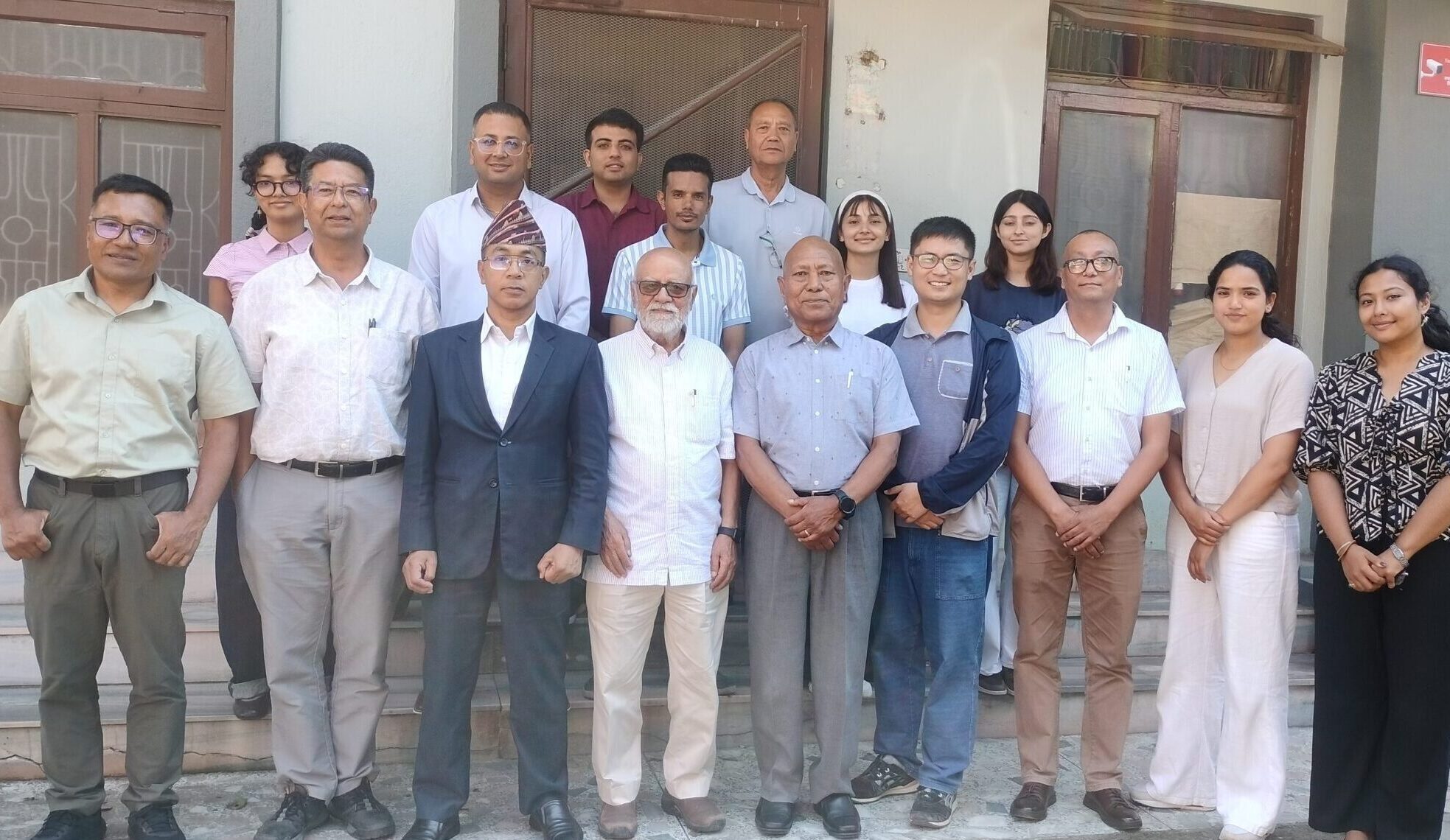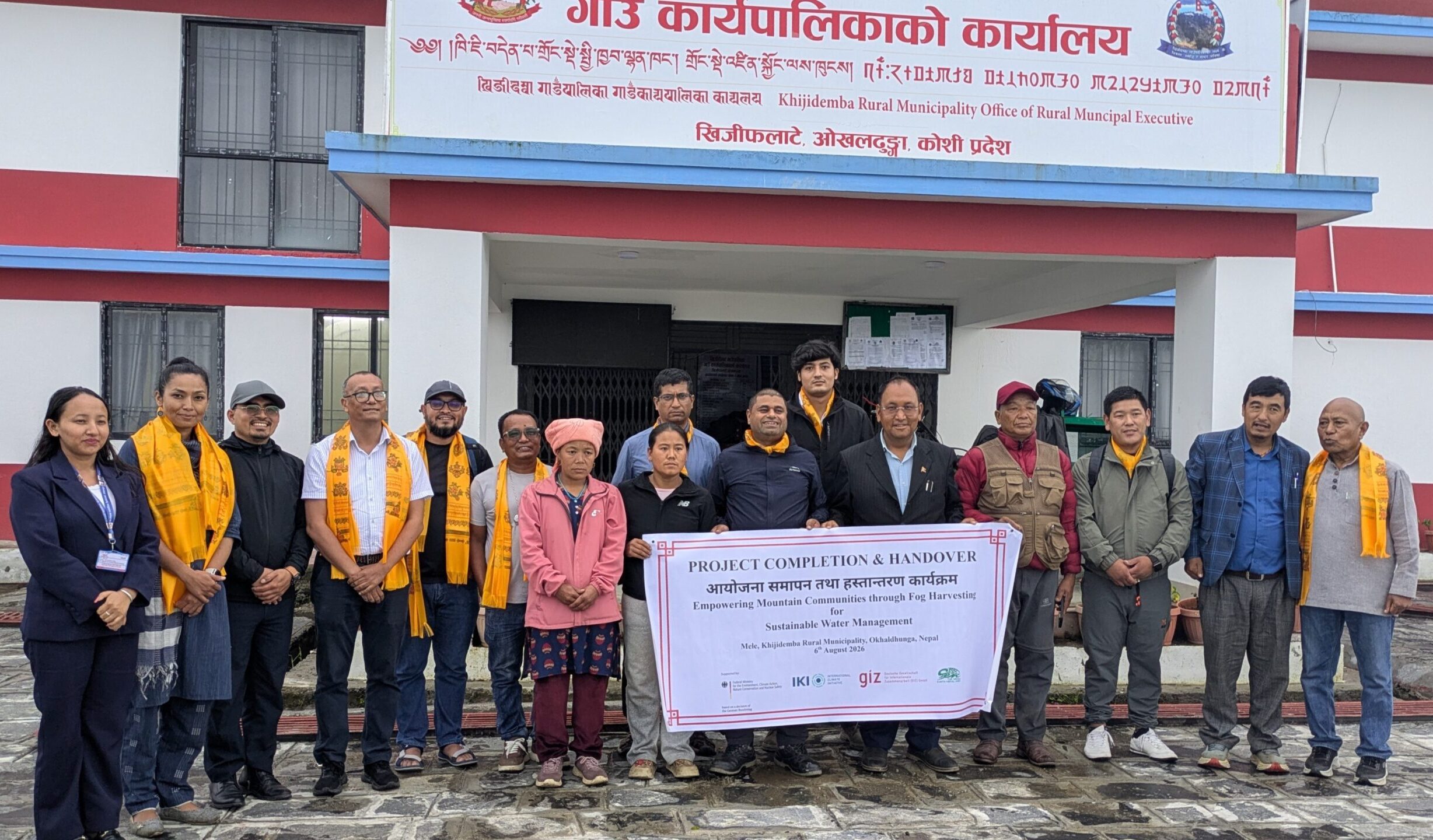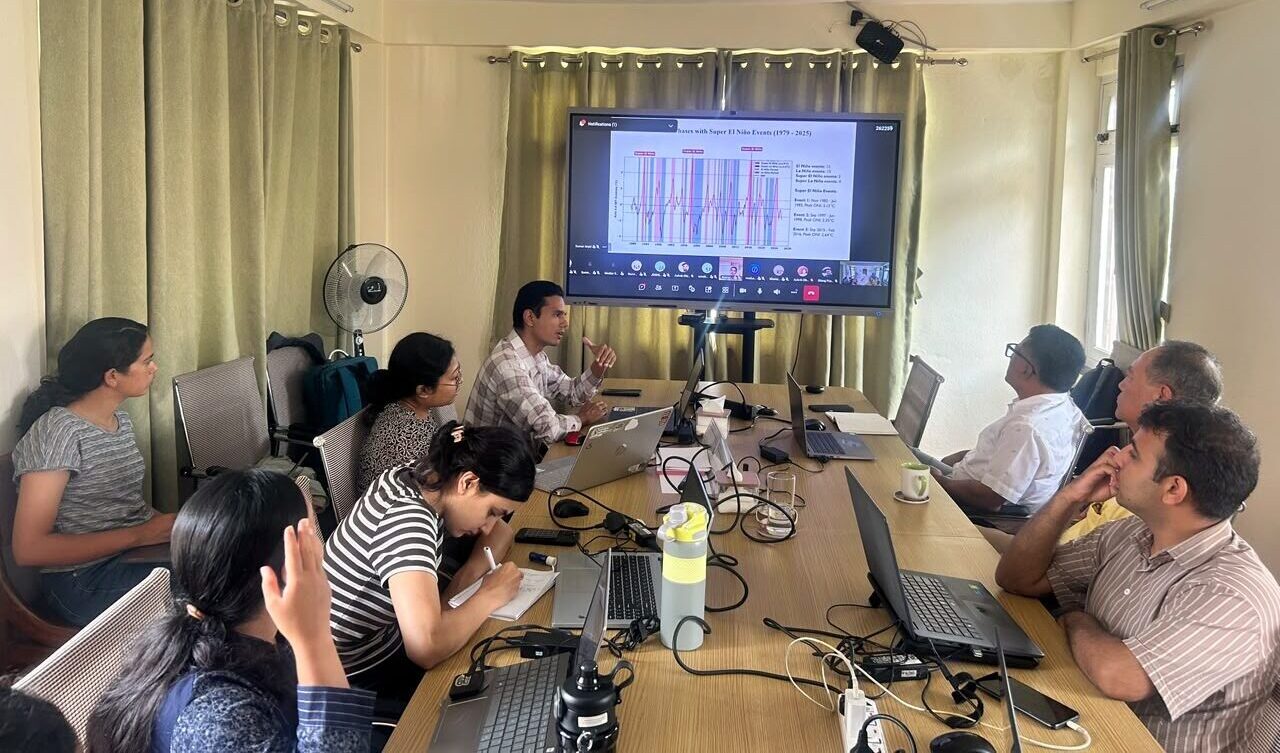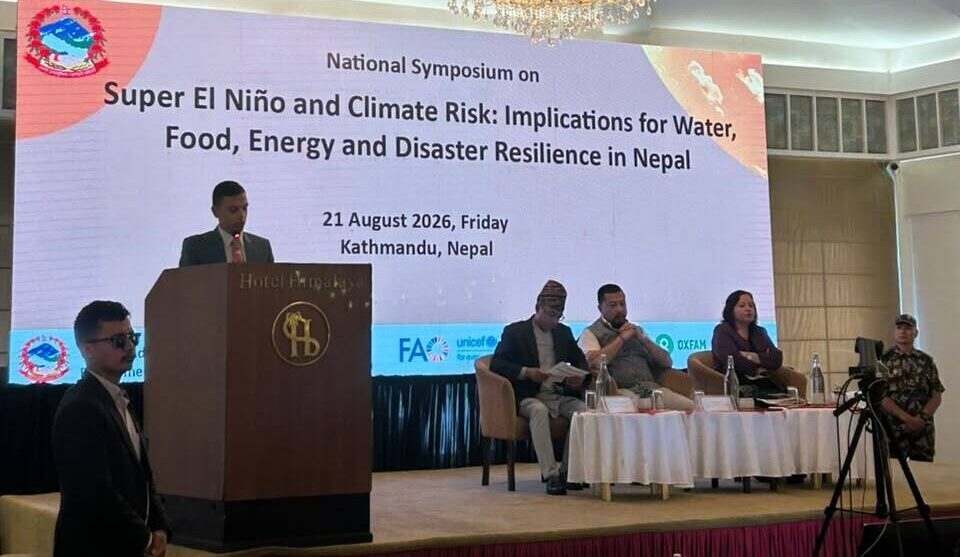
On Friday, 21 August 2026, the Water and Energy Commission Secretariat (WECS) and the Department of Hydrology and Meteorology (DHM), with various partner organizations, organized the “National Symposium on Super El Niño and Climate Risk: Implications for Water, Food, Energy and Disaster Resilience in Nepal” at Hotel Himalaya, Lalitpur, bringing together around 150 policymakers, researchers, and experts. The Small Earth Nepal (SEN) was one of the contributing partner organizations supporting the symposium.
The symposium was held against the backdrop of forecasts indicating a high probability of a “Super El Niño” developing in late 2026 and continuing into early 2027, underscoring the need for strengthened preparedness and risk-informed planning across key sectors.
The chief guest of the symposium, Hon. Minister Mr. Biraj Bhakta Shrestha, Ministry of Energy, Water Resources and Irrigation, provided important insights into the El Niño-Southern Oscillation (ENSO) and its potential implications for Nepal. He emphasized the need to better understand climate variability and strengthen institutional preparedness to address potential risks to the country’s water, energy, agriculture, and disaster management sectors.
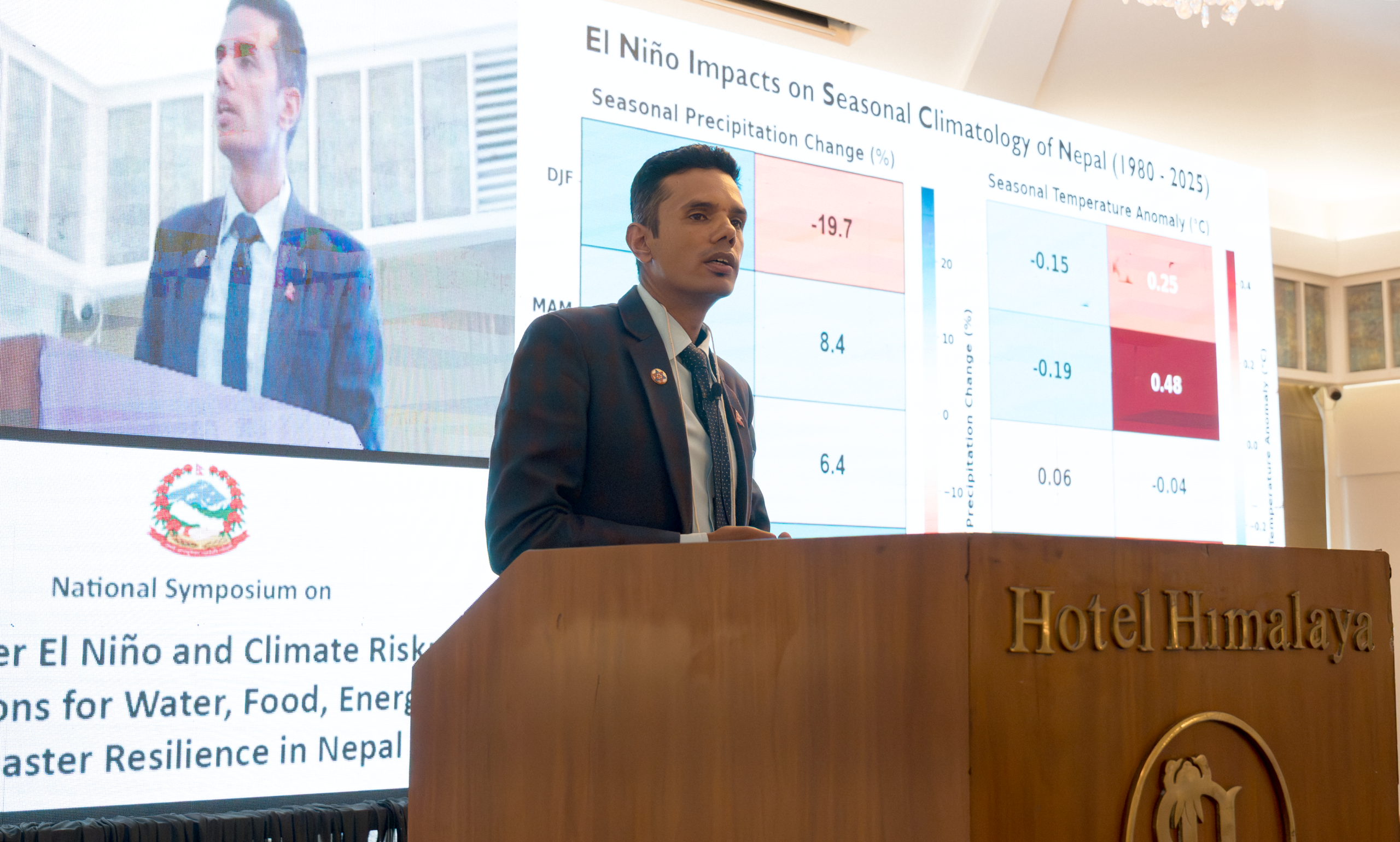
The technical session, “Super El Niño in Cryosphere, Water Resources and Energy Security,” was chaired by Dr. Madan Lall Shrestha, Advisor at The Small Earth Nepal (SEN). Mr. Kumar Aryal, an affiliate at SEN and an Assistant Professor at Tribhuvan University (TU), presented on “Impacts of ENSO on Nepal’s Hydroclimatic Variability and Agricultural Productivity.” His analysis identified three Super El Niño events affecting Nepal since 1980-2025: 1982-83, 1997-98, and 2015-16. The findings highlighted the potential implications of El Niño-related climate variability, including monsoon rainfall deficits, drought and moisture stress in agricultural areas, and reductions in crop yields, with broader implications for water resources and hydropower generation, emphasizing the importance of anticipatory action and sector-specific preparedness.
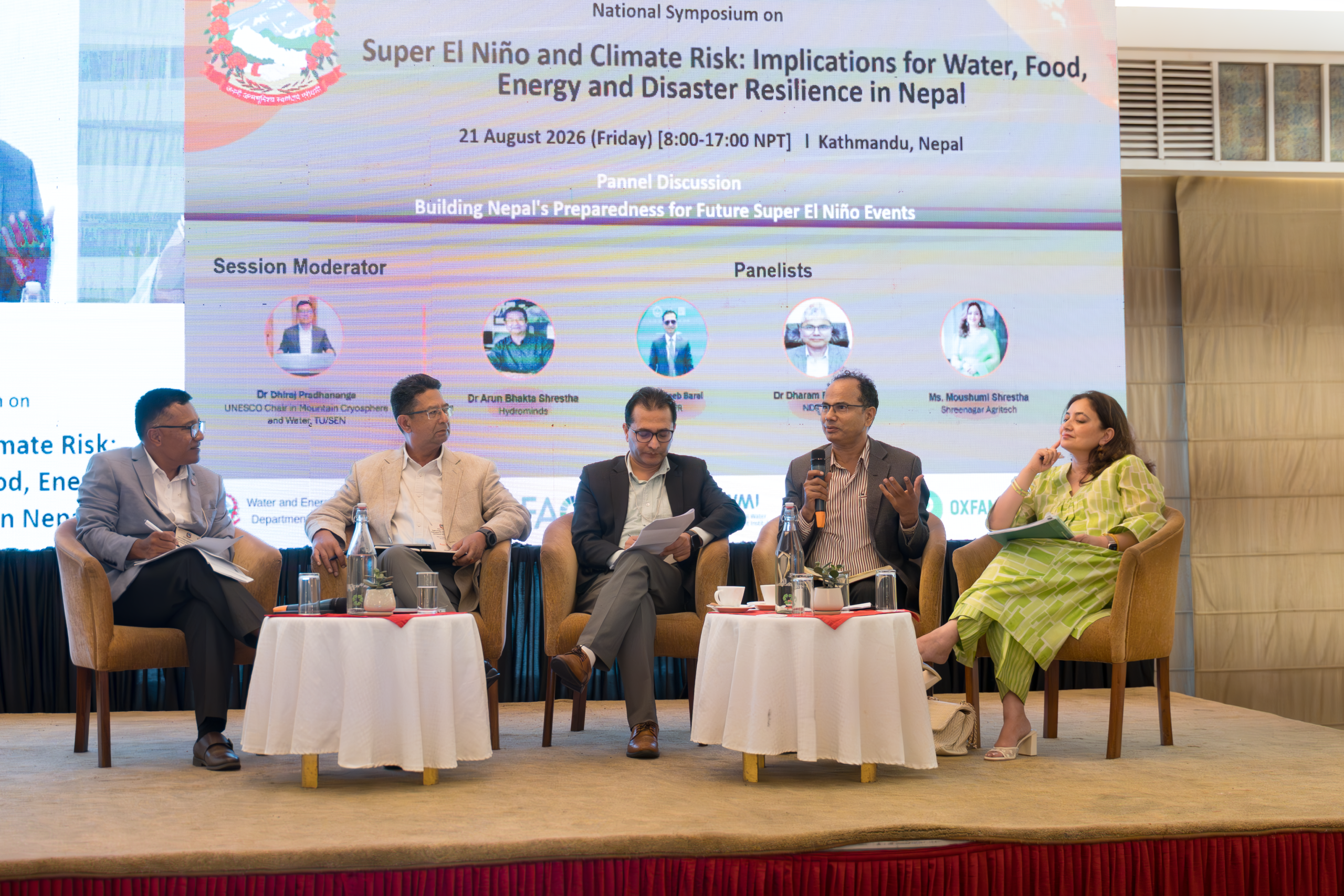
The panel discussion on “Building Nepal’s Preparedness for Future Super El Niño Events” was moderated by Dr. Dhiraj Pradhananga, Founder President of SEN) and UNESCO Chair in Mountain Cryosphere and Water at Tribhuvan University (TU). The panelist included Dr. Arun Bhakta Shrestha representing Hydrominds, Ms. Shabnam Shrestha representing Action, Inaction Facing Climate Change (AICC), Dr. Dharma Raj Upreti representing NDRRMA, Ms. Moushumi Shrestha representing Shreenagar Agritech. The discussion focused on Nepal’s preparedness for future Super El Niño events, including the need for stronger coordination, early warning systems, risk-informed decision-making, and sector-specific preparedness. The panel emphasized the importance of using scientific information and climate forecasts to support practical actions and strengthen resilience in Nepal’s water, energy, agriculture, and disaster risk management sectors.
The discussions and evidence presented at the symposium are expected to contribute to the development of a Sectoral Super El Niño Contingency Framework and a National Policy Brief on Super El Niño Preparedness, providing a basis for coordinated action and climate-risk-informed decision-making across Nepal’s key sectors.