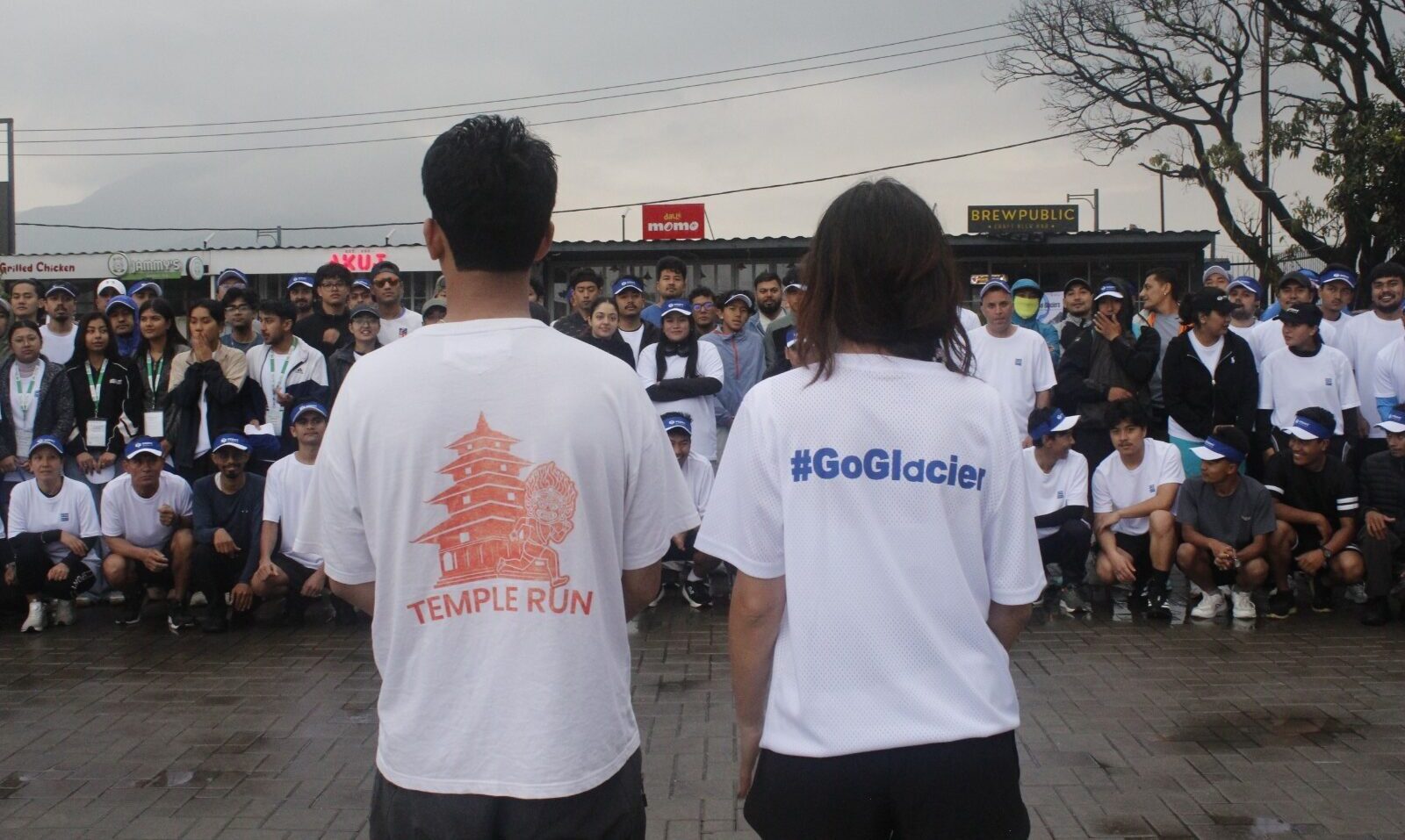
The “Go Glaciers” run event, held on 28 March 2026, was organized as a post-event of the Nepal National Glacier, Water, and Weather Week (NNGWWW) 2026. It served as a mass outreach initiative that brought together around 150 participants who ran in support of a common cause, raising awareness about the growing impacts of climate change on Himalayan glaciers. The message extended beyond the event through social media, reaching thousands of viewers. In addition to the run, the event featured talks and knowledge-sharing sessions, including contributions from Dr. Dhiraj Pradhananga, UNESCO Chair in Mountain Cryosphere and Water, who spoke about the International Year of Glacier Preservation and the ongoing Decade of Action for Cryospheric Sciences. These discussions highlighted the critical role of glaciers in sustaining life and emphasized how their loss directly affects daily life, including drinking water availability, food security, livelihoods, and disaster risks. Overall, the event aimed to bridge the gap between scientific knowledge and public understanding while encouraging greater public engagement in glacier conservation and climate action.
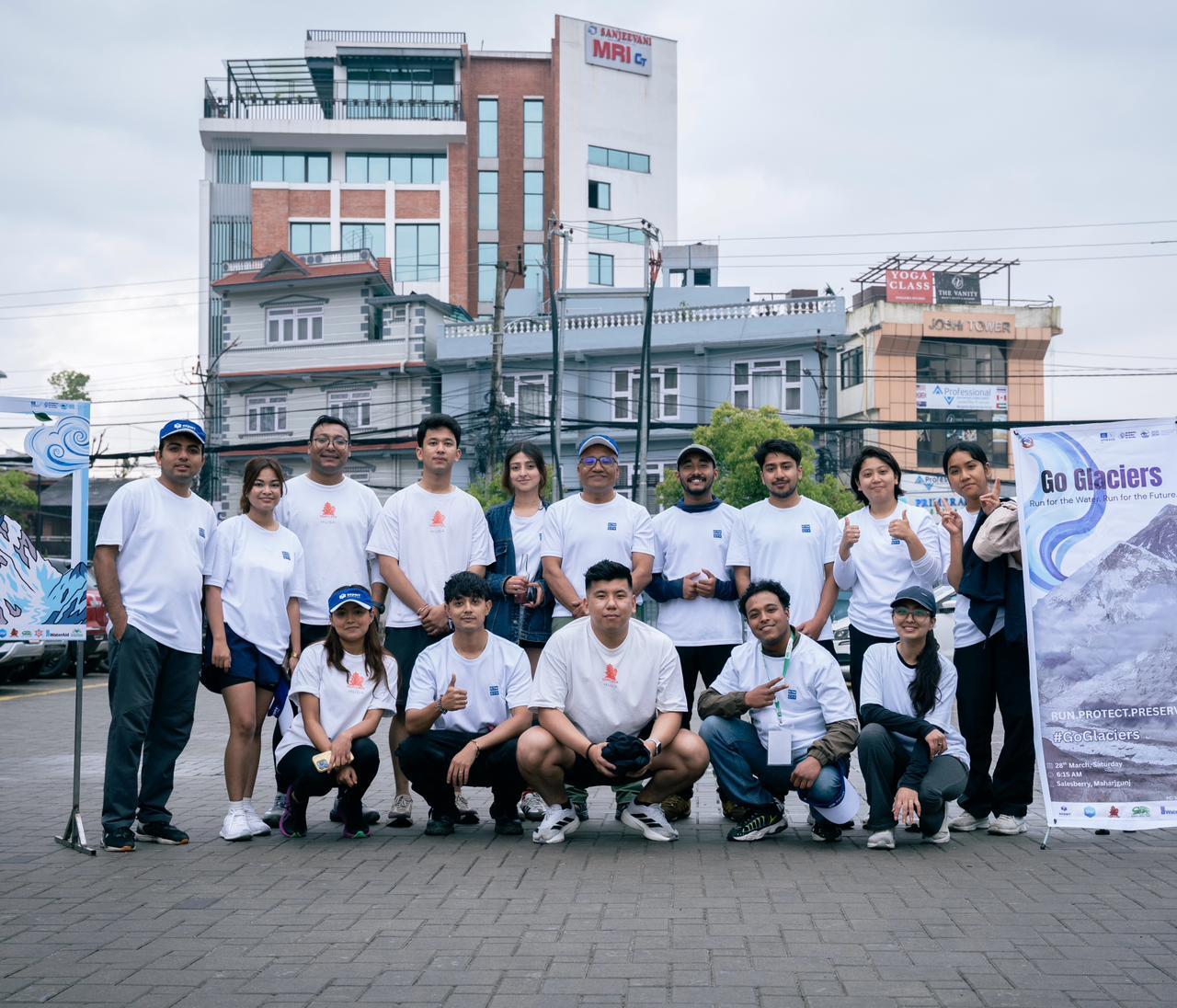
The event was supported by SNV Nepal, Youth Alliance for Environment (YAE), WaterAid Nepal, and Expert Education & Visa Services, and was conducted in collaboration with the Temple Run Club. Participants were provided with “#Go Glaciers” t-shirts supported by KTM City, which helped create a strong and unified visual identity for the campaign. Participants from diverse backgrounds collectively expressed their support for raising awareness about glaciers and climate change, making the issue more visible during the run and through social media. This collective representation reinforced the idea that the impacts of glacier change affect everyone and require shared understanding and action across different communities and sectors.
The run commenced from Salesberry, Maharajgunj, and followed a route extending towards the Baluwatar area before returning to the starting point.
Volunteers facilitated pre-run training sessions and post-run cool-down activities, ensuring participant safety and sustained engagement throughout the program. The event concluded with a recreational tug-of-war activity, which brought participants together in an interactive and energetic closing, strengthening a sense of community among attendees. Together, these elements contributed to a well-organized program that not only ran efficiently but also created meaningful visibility and public connection around the issue.