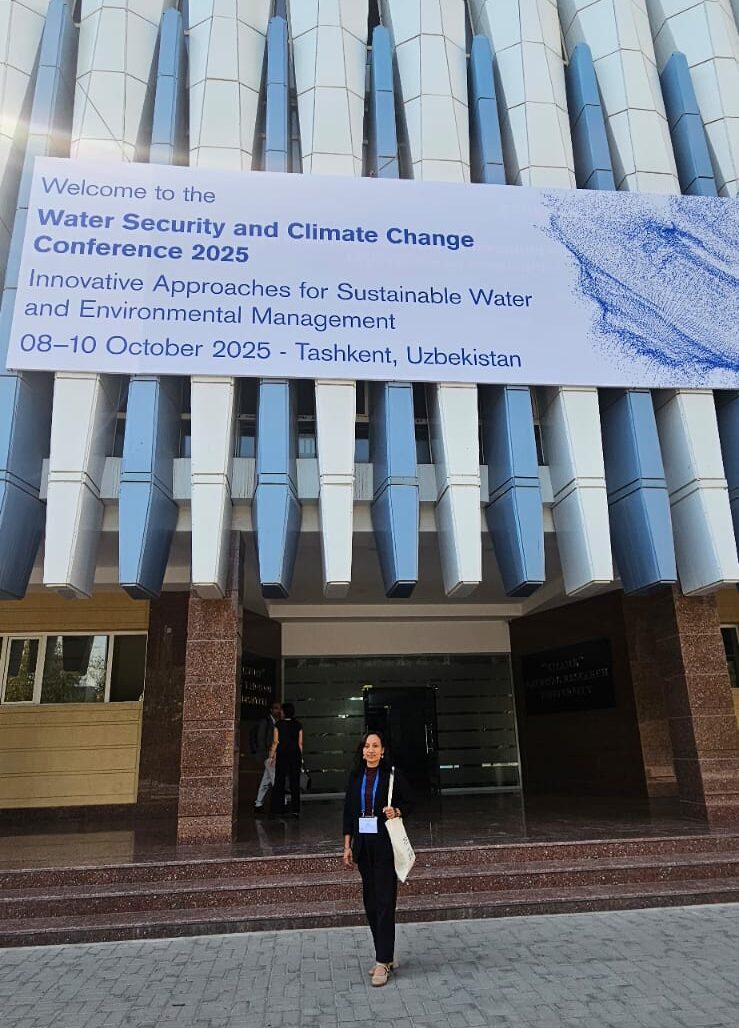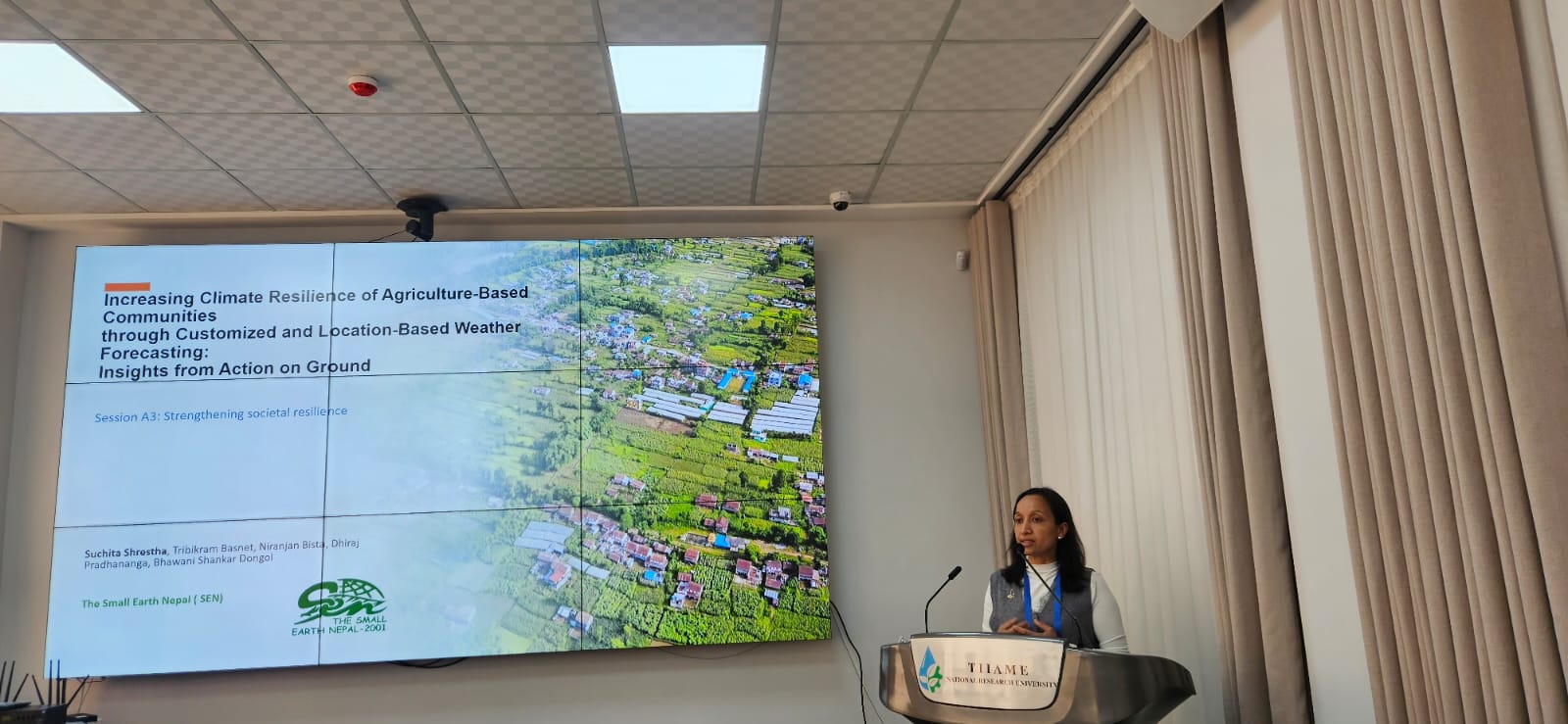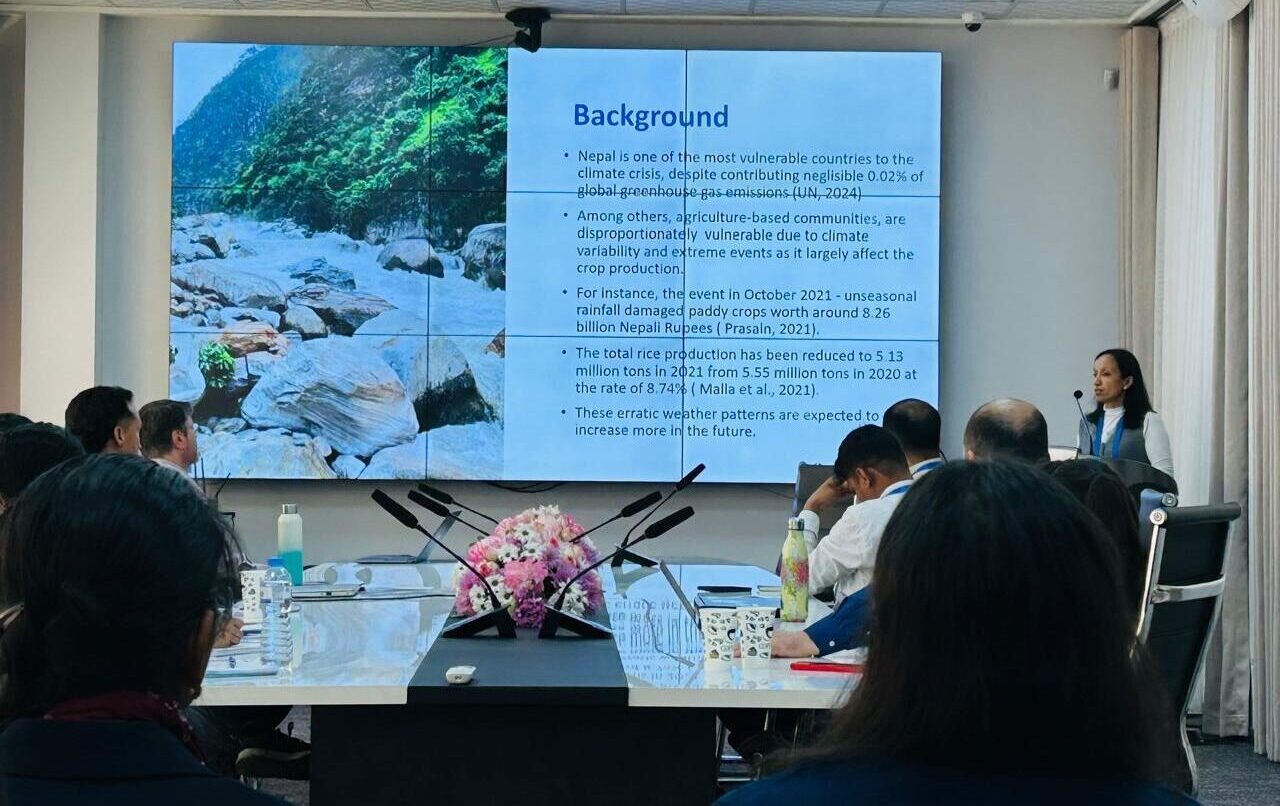
Ms. Suchita Shrestha, a Project Lead at The Small Earth Nepal presented on “Increasing Climate Resilience of Agriculture-Based Communities through Customized and Location-Based Weather Forecasting: Insights from Action on Ground” at the Water Security and Climate Change Conference 2025 held on 8 October 2025 – 10 October 2025 at Tashkent, Uzbekistan. The presentation was based on the key findings of the USAID funded project – “Improving Climate Services for Local Adaptation through Customized and Location-Specific Weather Forecasts”. The presentation highlighted the project’s main outcomes and lessons learned, focusing on enhancing resilience to climate change and improving food security of local communities through climate information. Further, it highlighted customizing weather forecasts, establishing dissemination channels based on local requirements by simplifying technical information for effective use by end-users.
The project was launched in 2023-2024 to address urgent need for the localized weather and climate information to help farmers make informed decisions about planting schedules and irrigation practices, prepare for and respond to extreme weather events, and can help communities develop long-term adaptation plans.
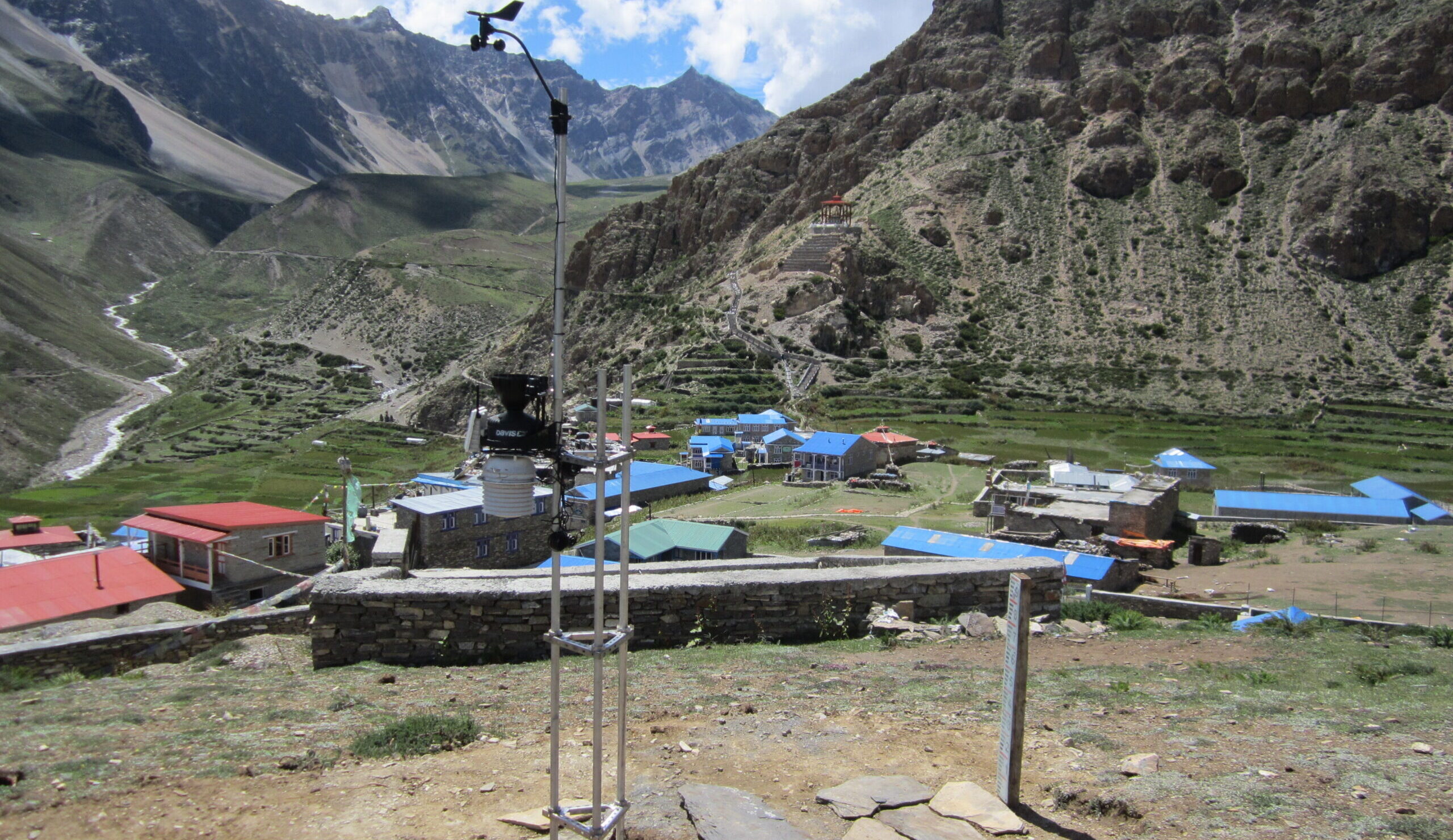
Over the course of project duration, the team collaborated with the SERVIR-HKH program of ICIMOD and used High Impact Weather Assessment Toolkit (HIWAT) model data to develop customized 3-days weather forecast. The team used a participatory approach to identify weather parameters, major crops and cropping patterns and smallholder farmers prioritization for the weather and bulletin products relevant to local needs and livelihoods. She also talked about the Mobile App called Hamro Mausam developed and piloted through this project for disseminating user-friendly, location-specific customized weather forecast products.
During the presentation, Ms. Shrestha shared key results, including prioritized weather forecast parameters, site specific major agriculture commodities including, cereal crops, vegetable, fruits and livestock and the dissemination channel prioritized by local communities. Among the important lessons learned were that (i) the participatory process is crucial to ensure that the weather information tailored to the specific needs of local communities and (ii) holistic program which includes, crop and livestock insurance, promotion of water efficient technologies, and water conservation, mapping of indigenous knowledge and promotion of agro product needs to be designed for impactful results. The session sparked valuable discussions among participants and opened doors for further suggestions.