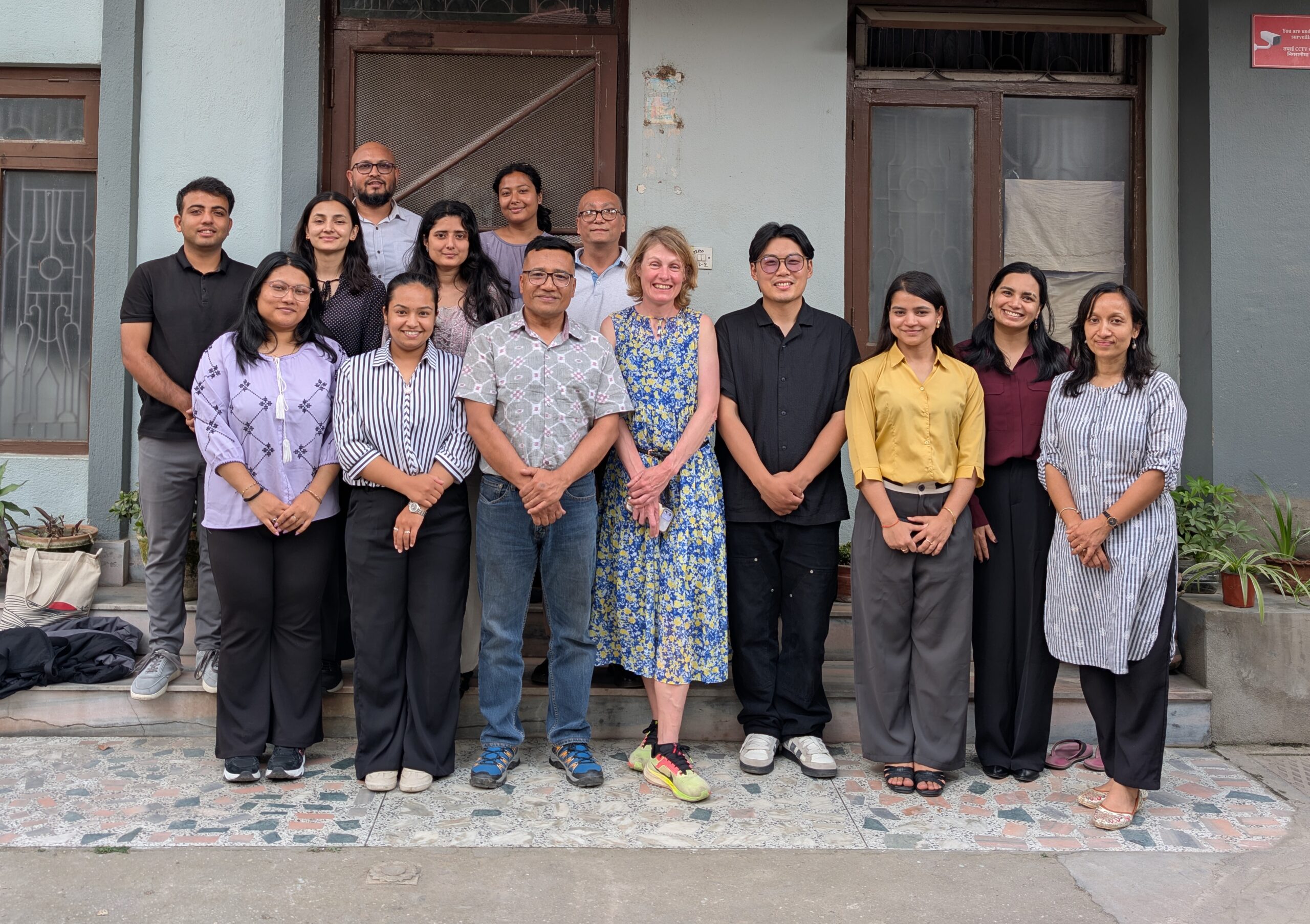
The Small Earth Nepal (SEN) welcomed renowned climate and biodiversity policy expert, anthropologist, and elite mountain athlete, Ms. Carole Fuchs, for an inspiring dialogue on accelerating climate action in the Himalayas and beyond.
Carole Fuchs has spent years in the Himalayas, climbing multiple 8,000-metre peaks, including Mount Everest, while documenting the growing impacts of climate change in glaciers, fragile ecosystems and mountain communities.
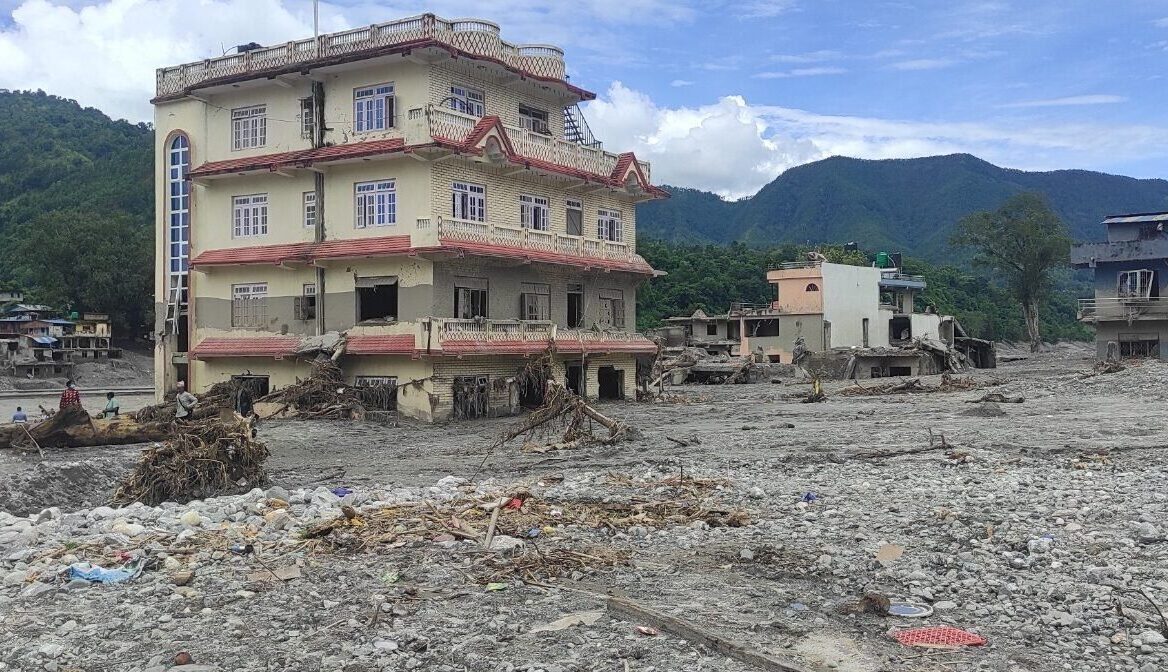
Her visit to SEN explored how science, storytelling, policy and local action can come together to address the urgent climate crisis. The conversation also highlighted the alarming growth of the glacial lake in the Kanchenjunga Glacier on the way to Kanchenjunga Base Camp, underscoring the increasing risks posed by Glacial Lake Outburst Floods (GLOFs) in the Himalayas.
Dr. Dhiraj Pradhananga, Founder President of SEN and the UNESCO Chair in Mountain Cryosphere and Water, at Tribhuvan University, shared the organization’s ongoing efforts under the Decade of Action for Cryospheric Sciences (DACS) and emphasized the importance of stronger international collaboration for mountain-focused climate negotiations. He invited Carole Fuchs to work together to strengthen global advocacy and accelerate immediate climate action for vulnerable cryosphere regions.
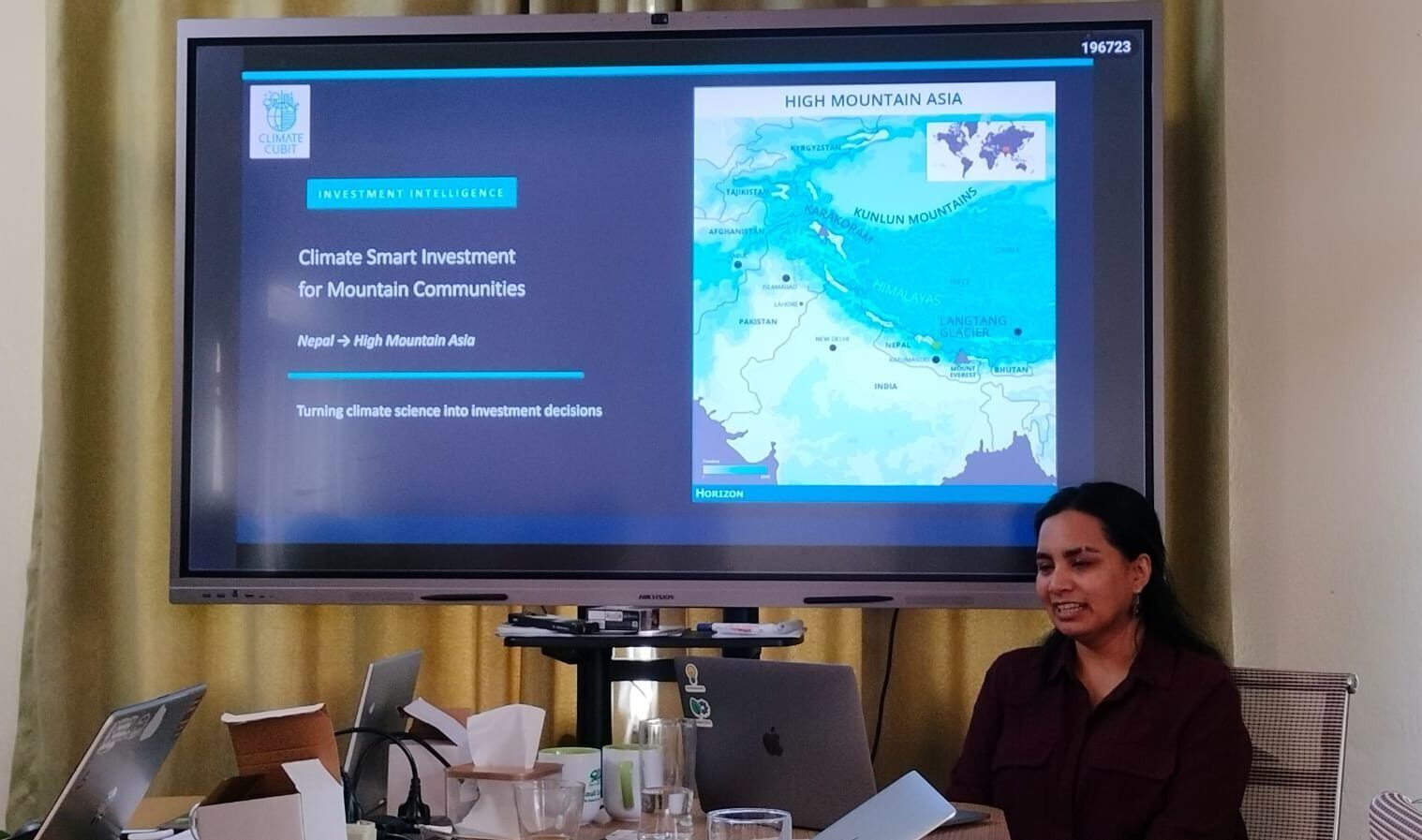
The meeting was joined by Mira Khadka and Rubina Adhikari, Co-founders of ClimateCubit, a Nepal-based climate-tech startup translating cryosphere and climate science into the financial and planning intelligence that informs how mountain communities and the institutions investing in them make decisions. They discussed the working prototype of their first product, HimalayaRisk and the broader gap in decision-grade climate risk intelligence in Nepal and across the Hindu Kush Himalaya (HKH).
The meeting was also attended by Tenzing Chogyal Sherpa from Cryosphere Society Nepal (CSN), who is currently pursuing PhD at Utrecht University under the supervision of Dr. Walter Immerzeel. His research focuses on the Hydrological response of Himalayan snowpacks in the Nepal Himalayas, contributing to ongoing studies on cryosphere dynamics and mountain hydrology in the region.
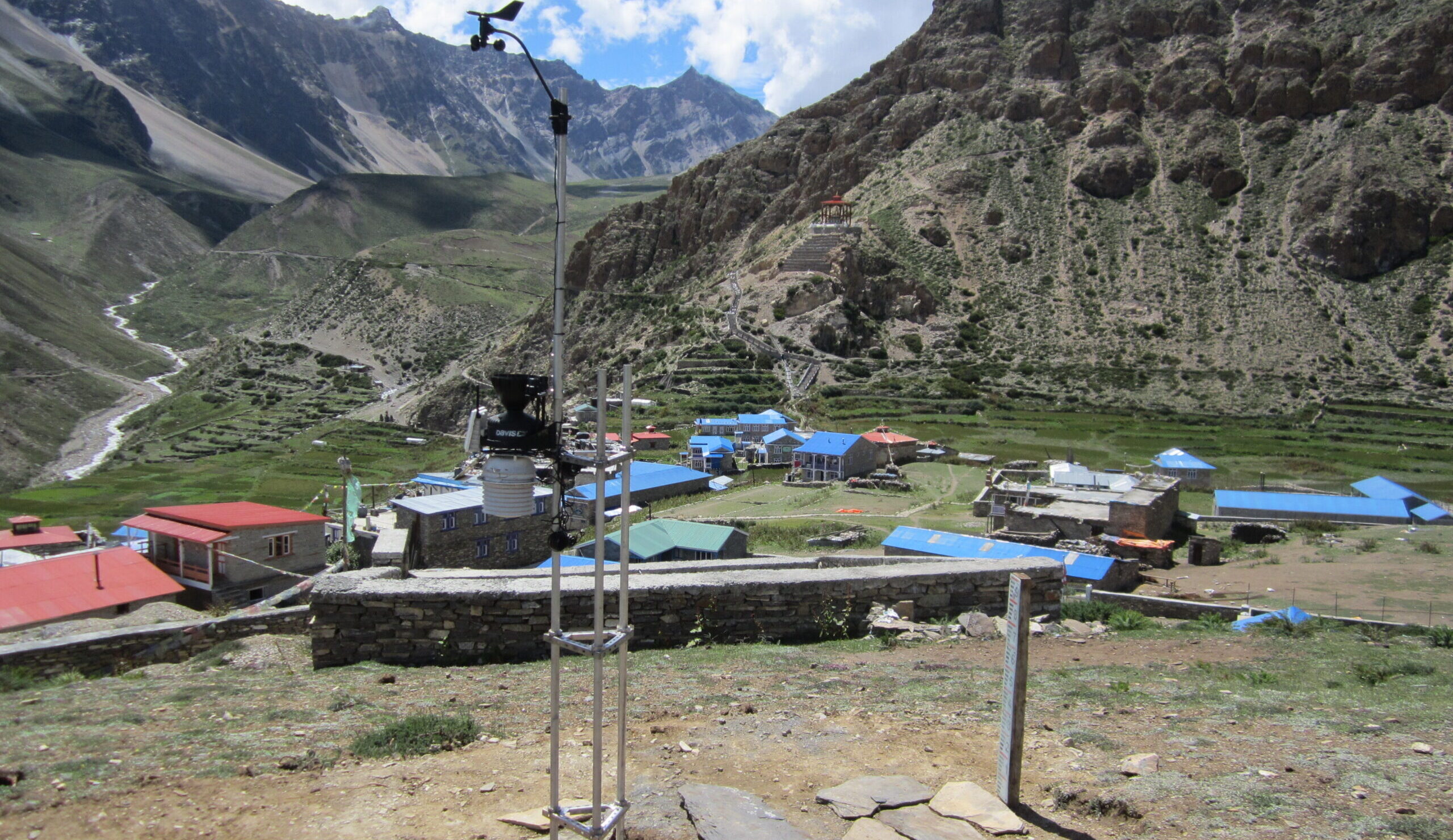
SEN also shared updates in its Him-DATA project, an initiative focused on strengthening Himalayan climate data systems and evidence-based action for resilience and sustainability.
The visit marked an important step toward building stronger partnerships between researchers, policy experts and innovators, to ensure that climate action is not among researchers, policy experts, and innovators to ensure that climate action is not delayed rough collaboration, science, and global solidarity.