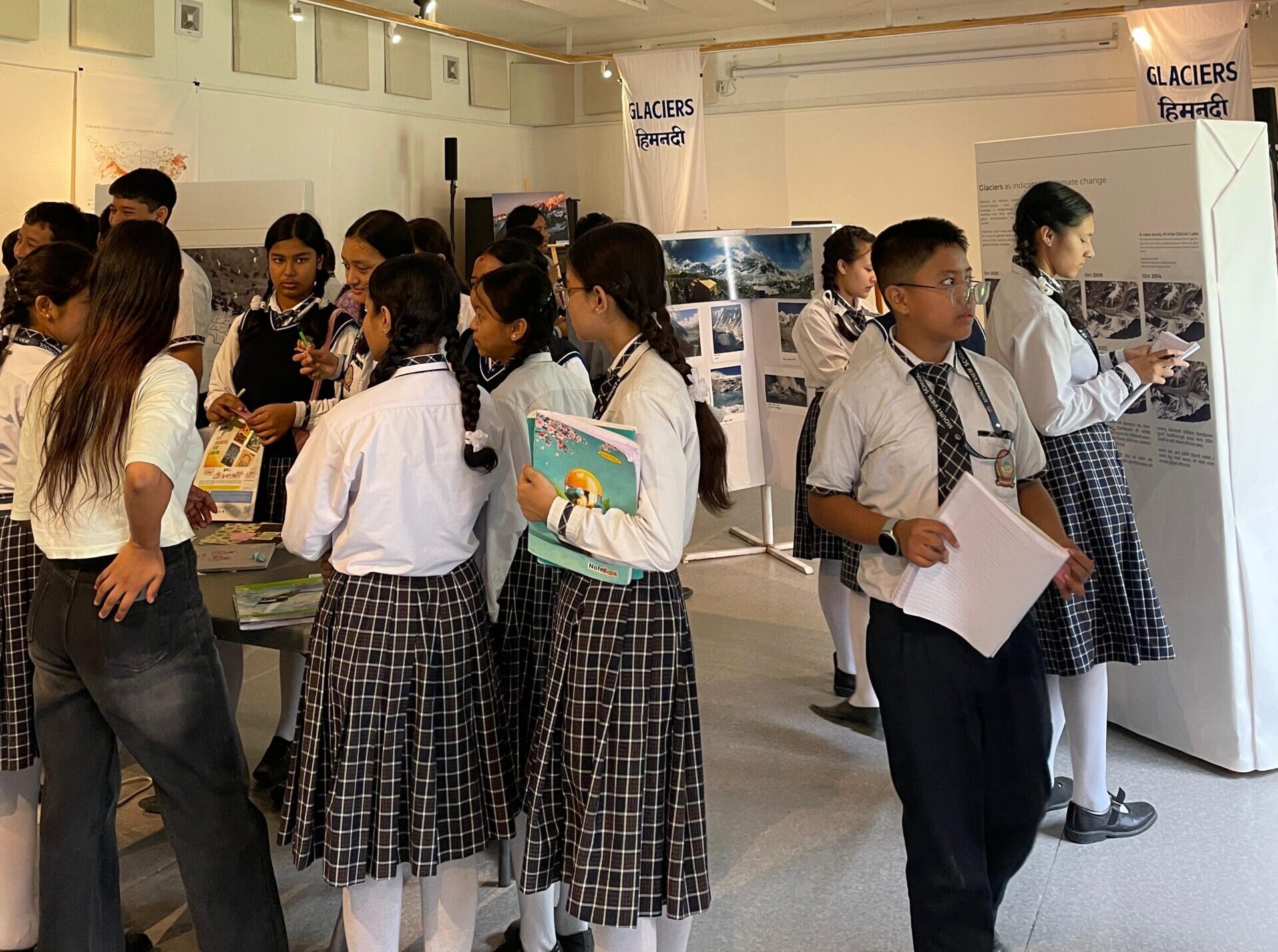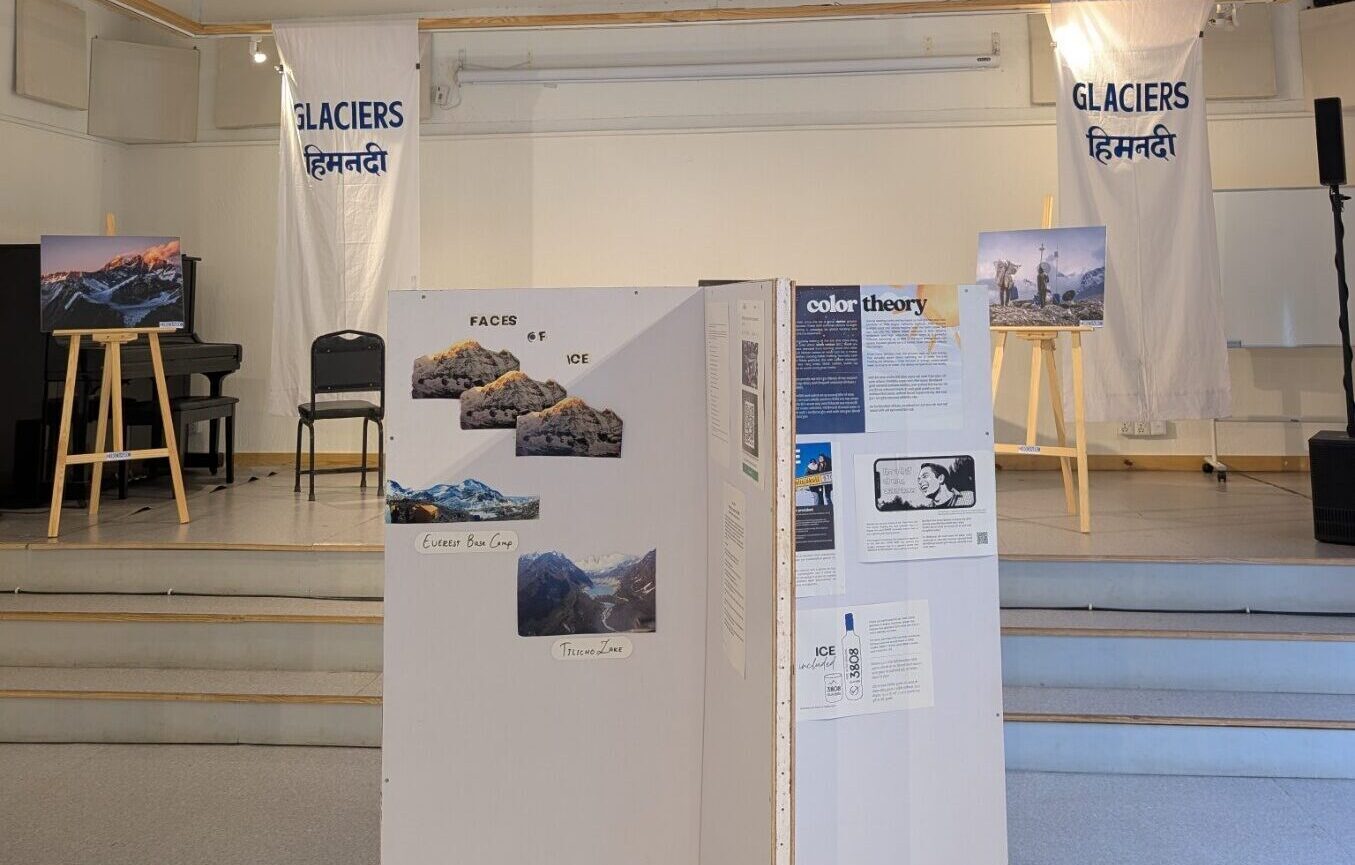
The “Faces of Ice” exhibition was hosted at the Alliance Française Kathmandu from 1-4 September 2025, focusing on the critical issue of melting glaciers in the Himalayas. The exhibition, curated by Rajina Shrestha and Rahul G. Rajkarnikar, drew over 400 visitors, including students from AVM Higher Secondary Boarding School, Shubhakamana Secondary Boarding School and Mount View English Boarding School.
The exhibit was an education for sustainability project funded under the 2025 Global Seed Grant from the Korea SHE Foundation. It was organized in association with Fun Play Learn (FPL) and The Small Earth Nepal (SEN), with additional knowledge support from the International Centre for Integrated Mountain Development (ICIMOD) and the UNESCO Chair in Mountain Water Sustainability. The exhibition was themed around the “2025 International Year of Glaciers’ Preservation” and highlighted the effects of climate change on glaciers, their surrounding environment, the local culture, and future.
The exhibition featured several panels and interactive displays to educate visitors on the importance of glaciers. The panels included:
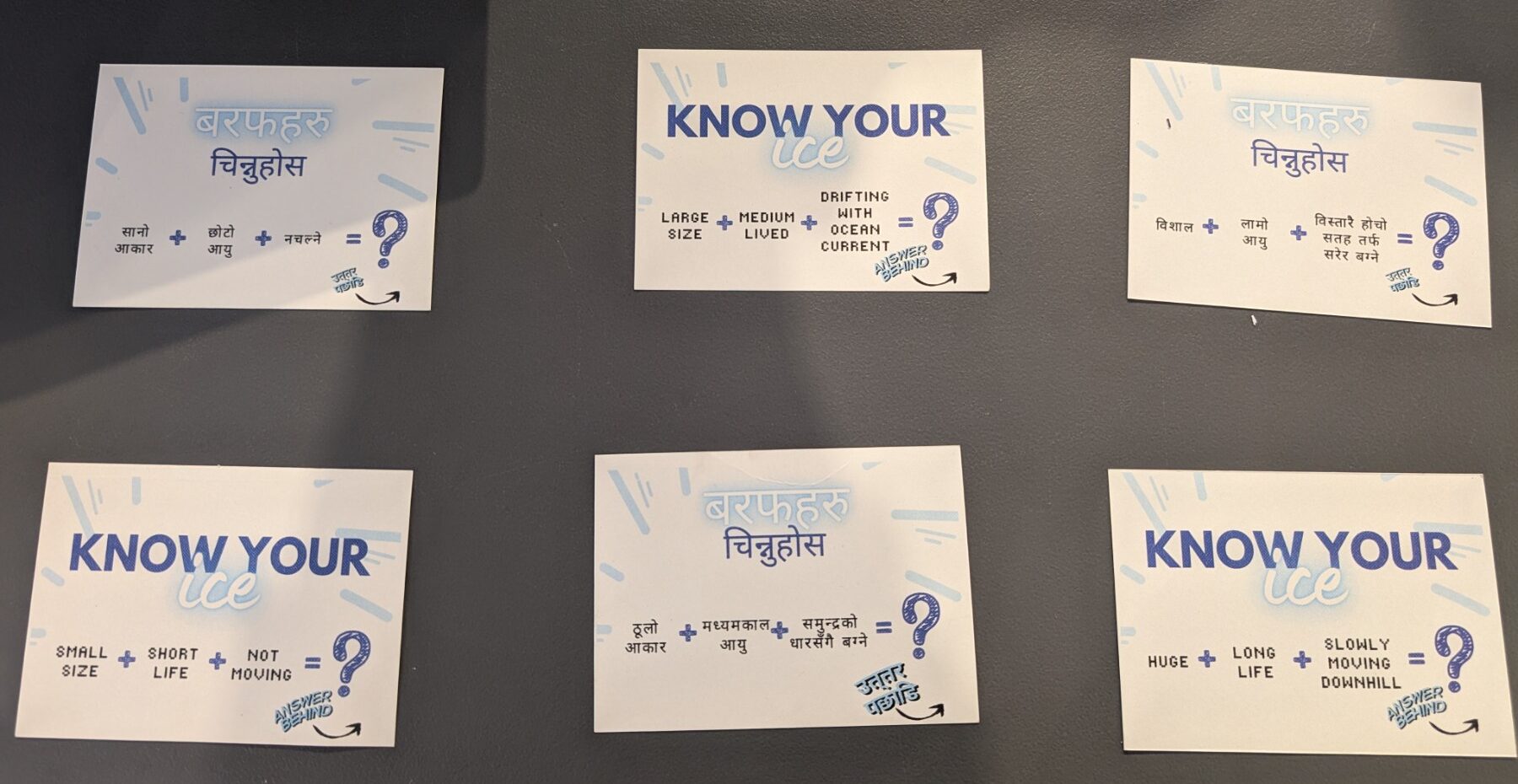
- Know Your Ice: Visitors learned to differentiate between ice, icebergs, and glaciers based on their size, lifespan, and movement through an engaging experience. Flash cards were set up on the table with questions on the front and answers in the back. This way the visitors could engage and learn in a fun way
- Glacier Formation and Anatomy: This explained how glaciers form from layers of compressed snow over decades and centuries. It also detailed the two main parts of a glacier: the accumulation area, where new snow adds ice, and the wastage area (or ablation area), where ice melts away. The concept of Equilibrium Line was introduced as a general indicator of the Glacier’s “health” in view of increasing global temperatures.
- Glaciers as Ecosystem Regulators: Glaciers in the Himalayas are vital sources of freshwater. They act as a natural reservoir, providing a reliable water supply for drinking, farming, and power generation, especially during the dry season.
- Glaciers as Indicators of Climate Change: This panel explained that glaciers act as “nature’s climate record-keepers,” providing some of the clearest evidence supporting climate change theories. A case study of increasing area coverage of Imja Glacier Lake demonstrated as a proof of the increasing glacial ice melt and global temperatures.

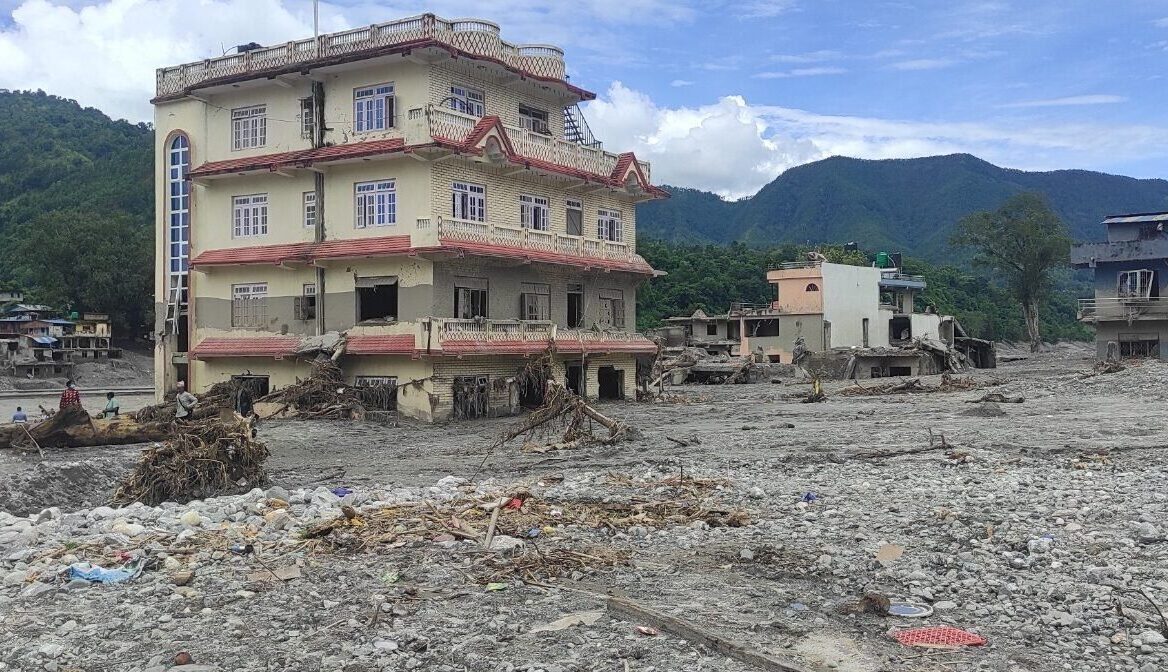
- Glacial Lake Outburst Floods (GLOFs): The exhibit provided an in-depth look at GLOFs, which are sudden releases of water from glacial lakes when their dams of ice or rock fail. These floods can rush downstream with little warning, carrying rocks, mud, and ice. The risk of a GLOF depends on factors like the strength of the dam, the amount of water in the lake, and the proximity of downstream communities, as well as other natural phenomenons like cloud bursts, earthquakes, snow & ice avalanches, rock falls and landslides.
- Social Impacts: The exhibition also highlighted the social issues and how they appear to be linked to the glacier crisis, particularly how the impacts disproportionately affect women and girls from marginalized communities, making them more vulnerable to harm and poverty.
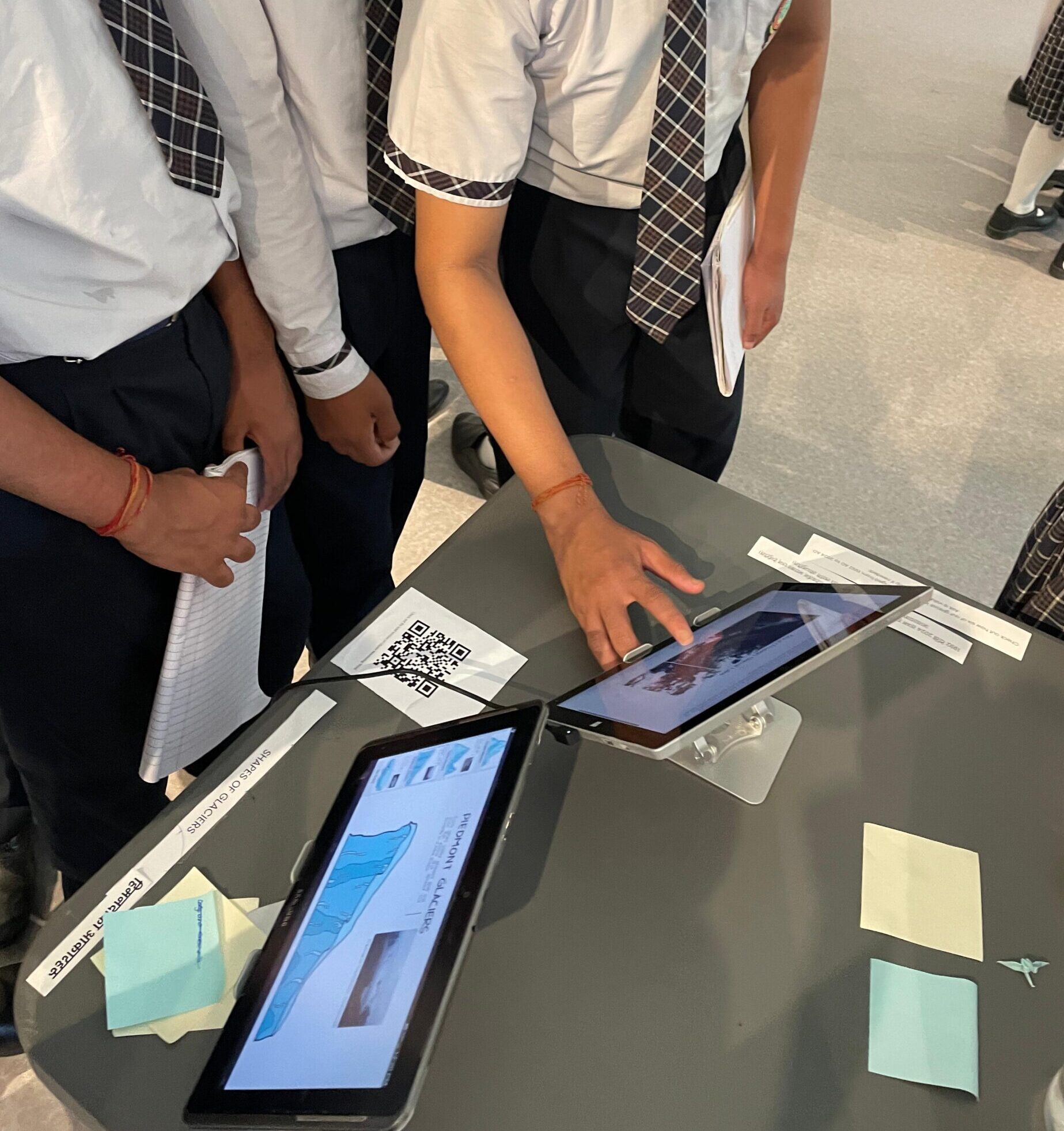
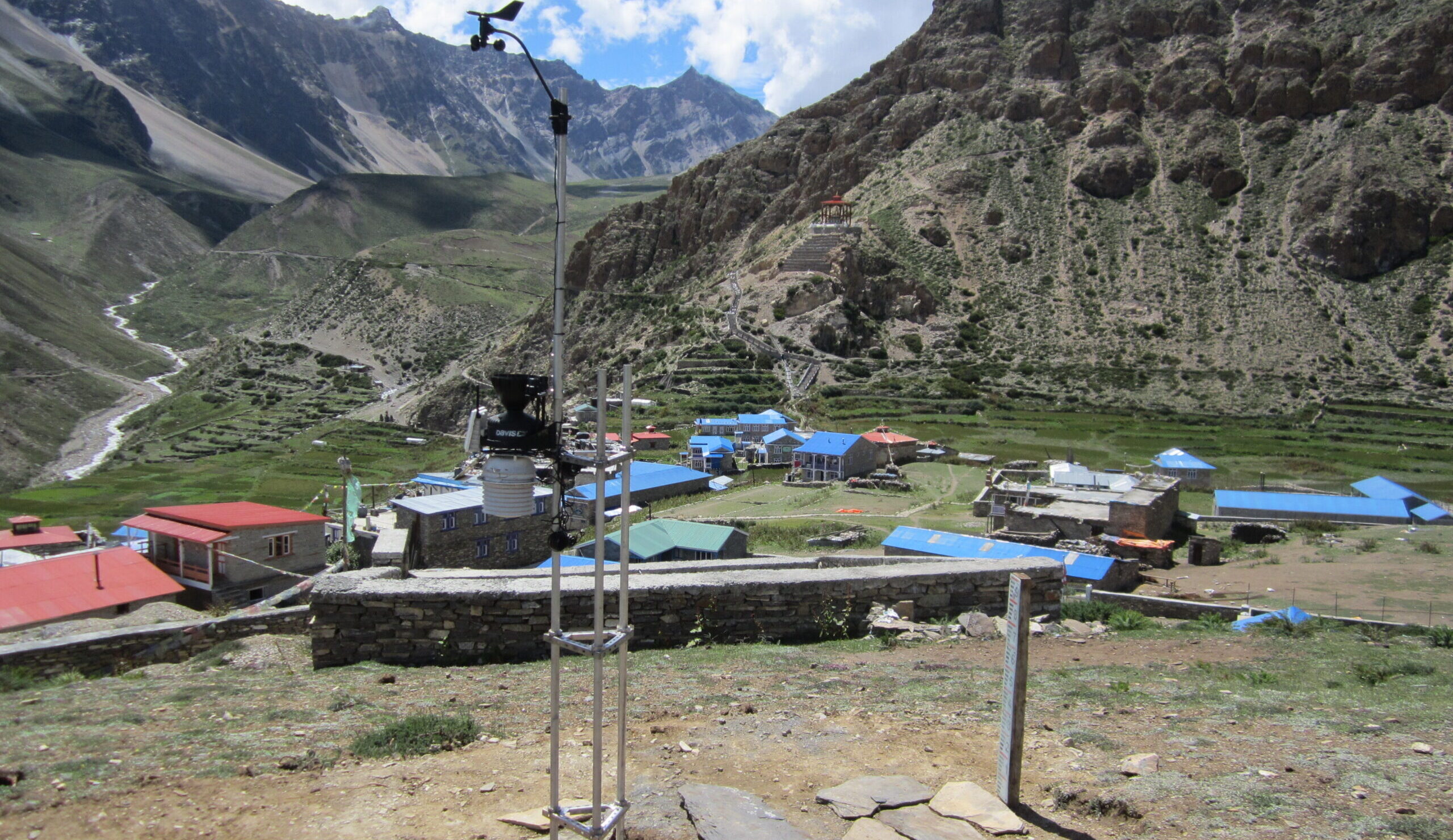
There were two more interactive displays at the exhibition. One showcasing different shape of glaciers and the other showcasing the Glacier Monitoring in Nepal. There were satellite images of six glacier lakes of Nepal from the year 1992- 2024, where the visitors could see the changes in the glaciers over time with a swipe.

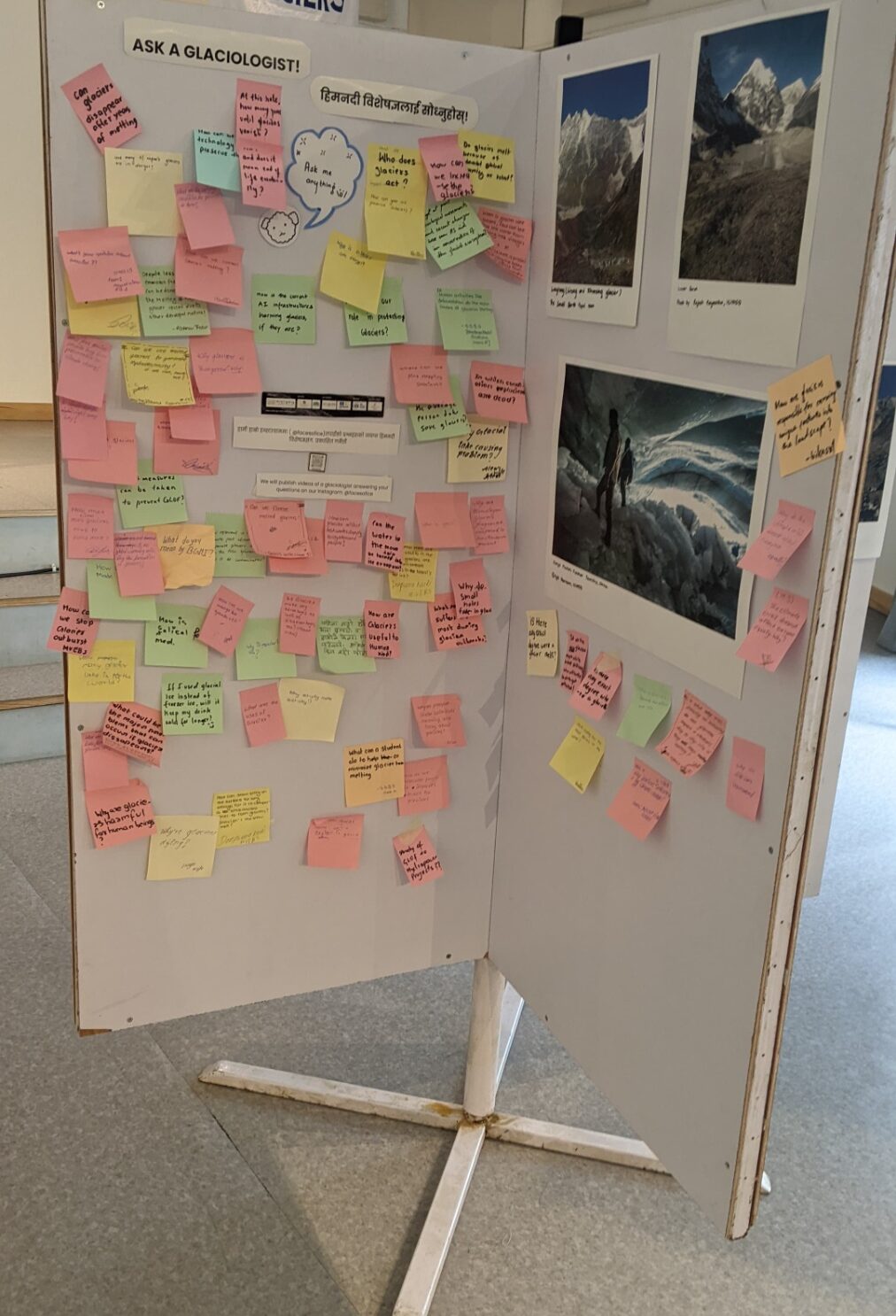
These interactive panels made the exhibition a truly engaging and educational experience. We’re proud to have contributed to raising awareness about this critical environmental and social issue. At the exhibition, we also had a space where the visitors could ask their questions, and we will have glaciologists to answer them after the exhibition.
The exhibition was documented by Mandala Television. Click here to watch the full video on YouTube.