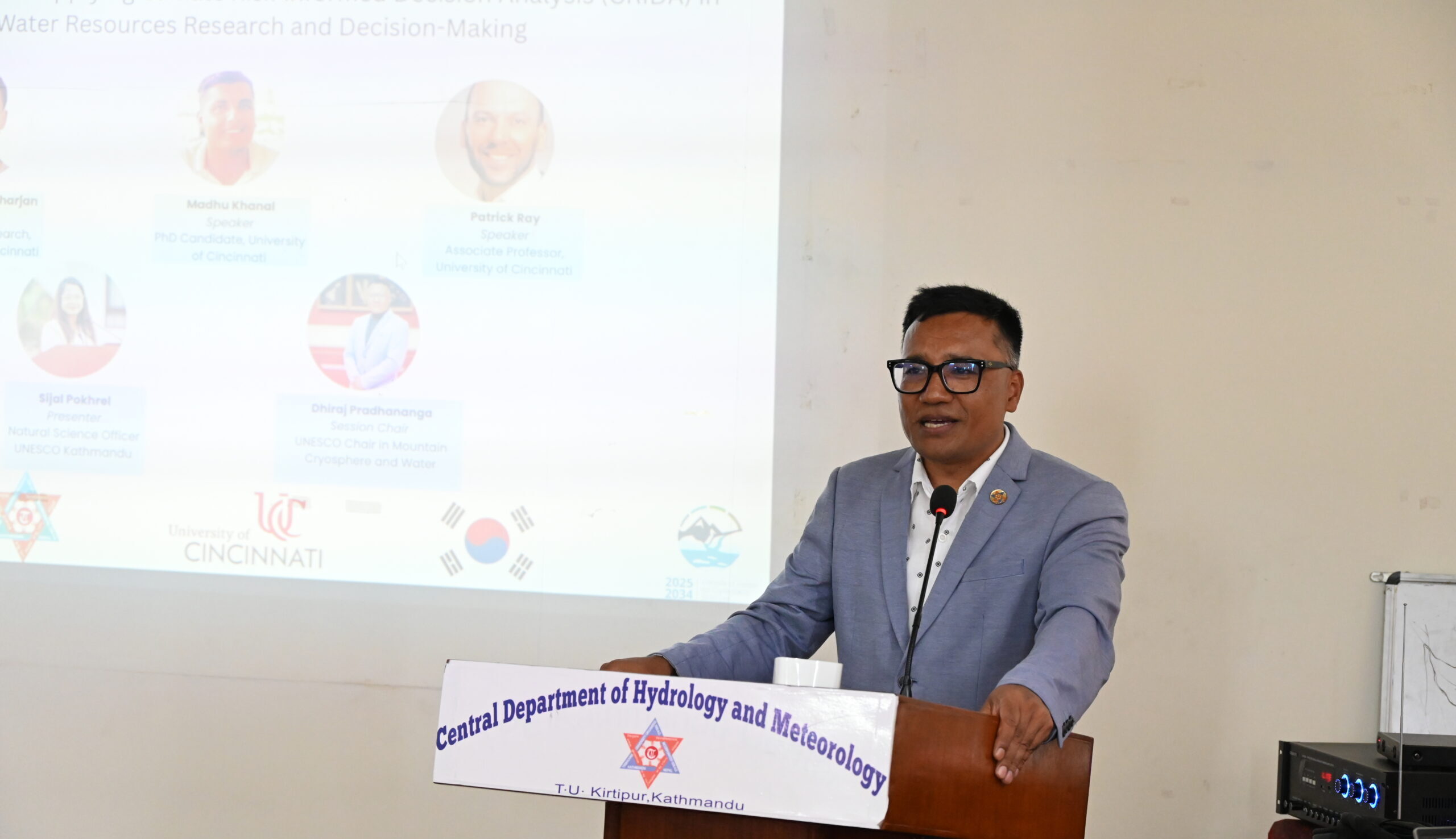
On 25 August 2026, the first session of the UNESCO Chair Talk Series was held at the Central Department of Hydrology and Meteorology (CDHM), Tribhuvan University (TU), Kirtipur, titled “Understanding and Applying Climate Risk-Informed Decision Analysis (CRIDA) in Water Resources Research and Decision-Making”.
The session was jointly organized by UNESCO, the UNESCO Chair in Mountain Cryosphere and Water at Tribhuvan University, CDHM, the University of Cincinnati and The Small Earth Nepal (SEN). It brought together researchers, faculty members, research scholars, practitioners, and students to exchange experiences on the application of CRIDA in the Koshi River Basin and explore how the approach could contribute to water resources planning in Nepal.
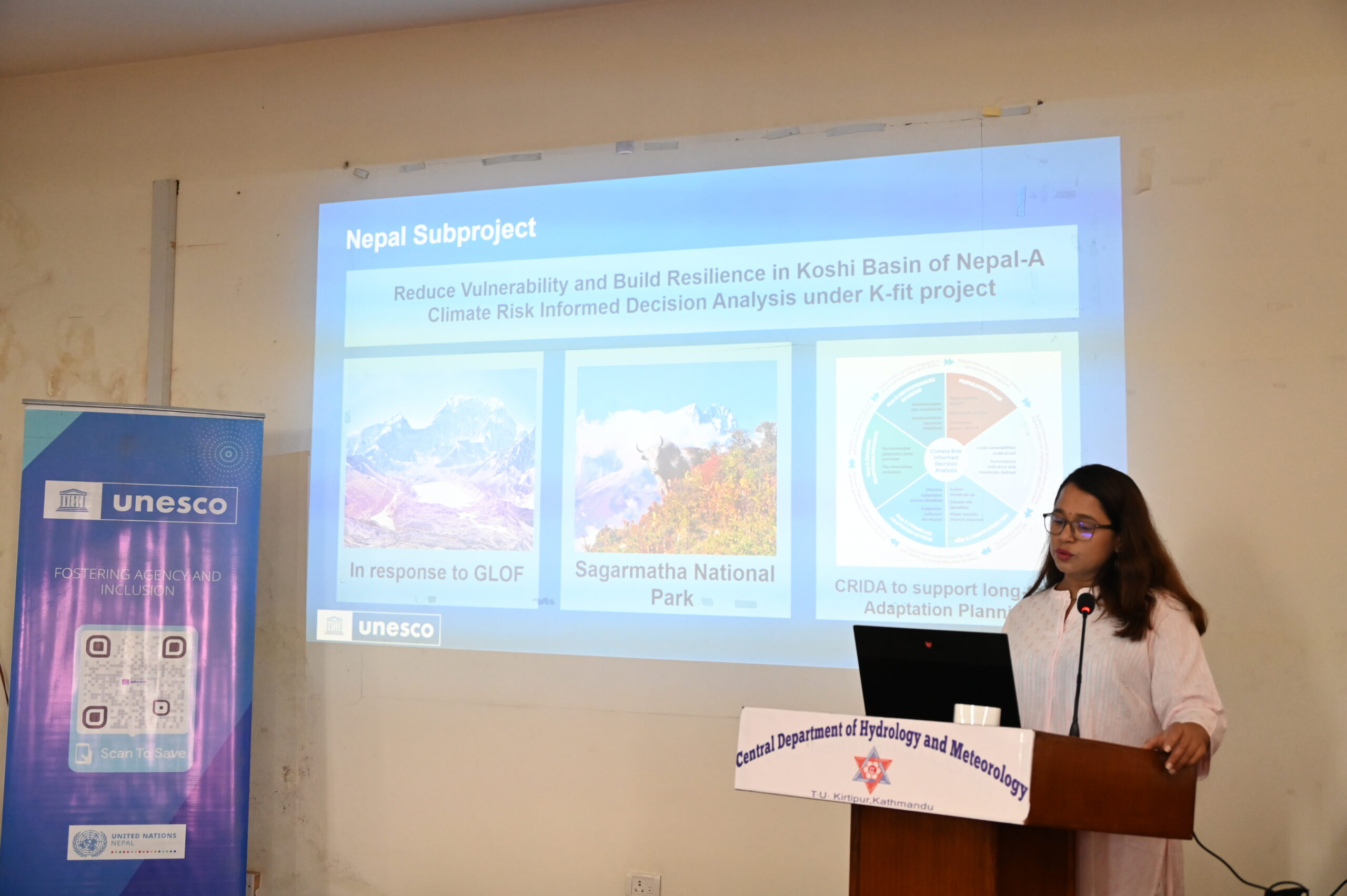
The session commenced with welcome remarks by Prof. Dr. Tek Bahadur Chhetri, Head of CDHM. Ms. Sijal Pokharel, Project Officer, Natural Sciences Unit, UNESCO, then introduced the CRIDA approach, highlighting its role in linking climate science, risk assessment, and decision-making in the face of uncertainty. She outlined the key components of the CRIDA framework and shared case studies demonstrating its application in different contexts, with particular emphasis on its bottom-up approach, which places stakeholder engagement and community voices at the center of the decision-making.
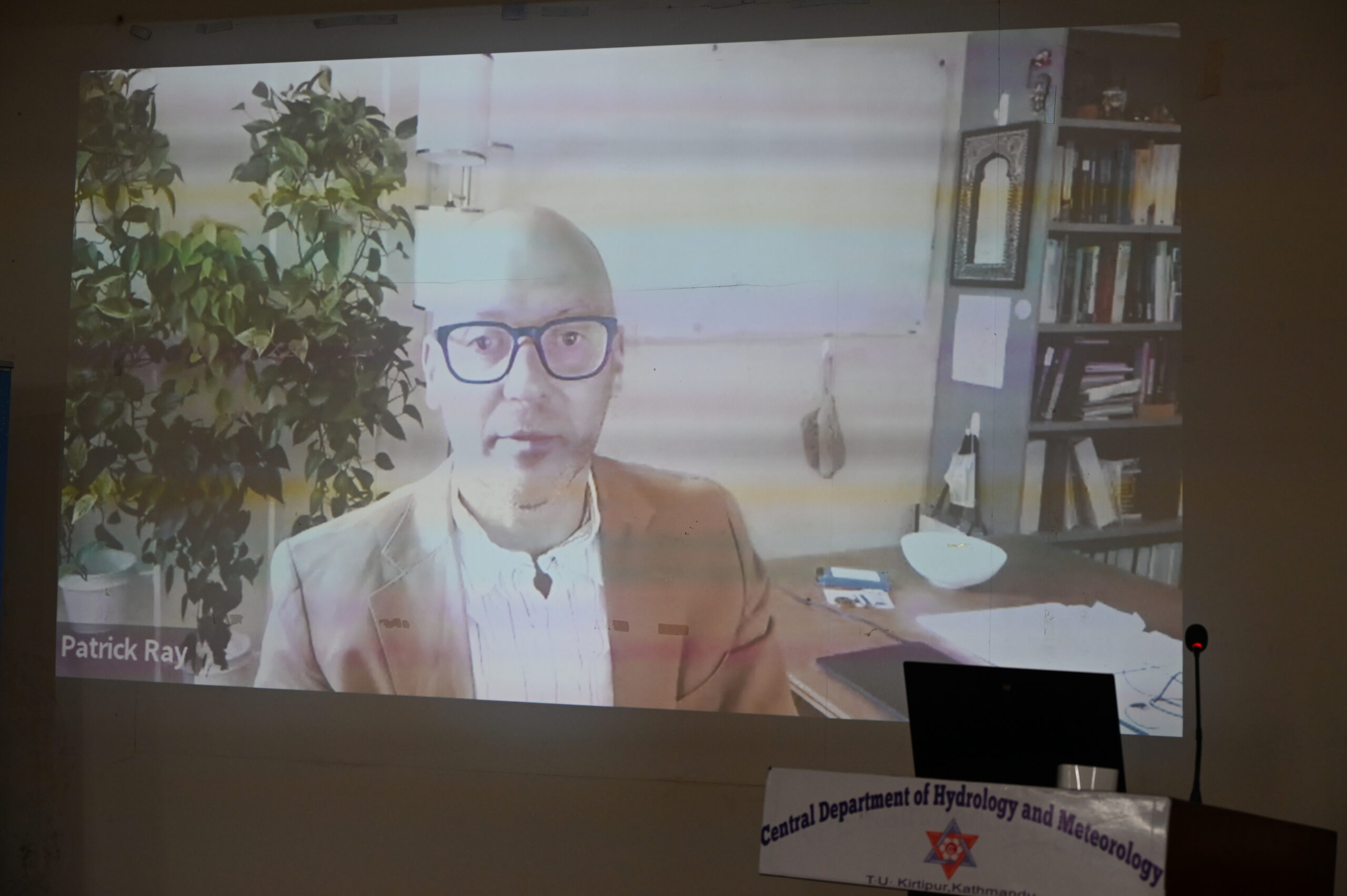
The session also featured a video message from Dr. Patrick Ray, Associate Professor at the University of Cincinnati, UNESCO Chair on Water and Climate Change, and co-developer of CRIDA. Reflecting on his experience with applying CRIDA in Nepal, he noted that the current study adopts a comprehensive view of climate risk, extending beyond hydropower to include glaciers, glacial lakes, GLOF risks, downstream impacts, flooding, and water security.
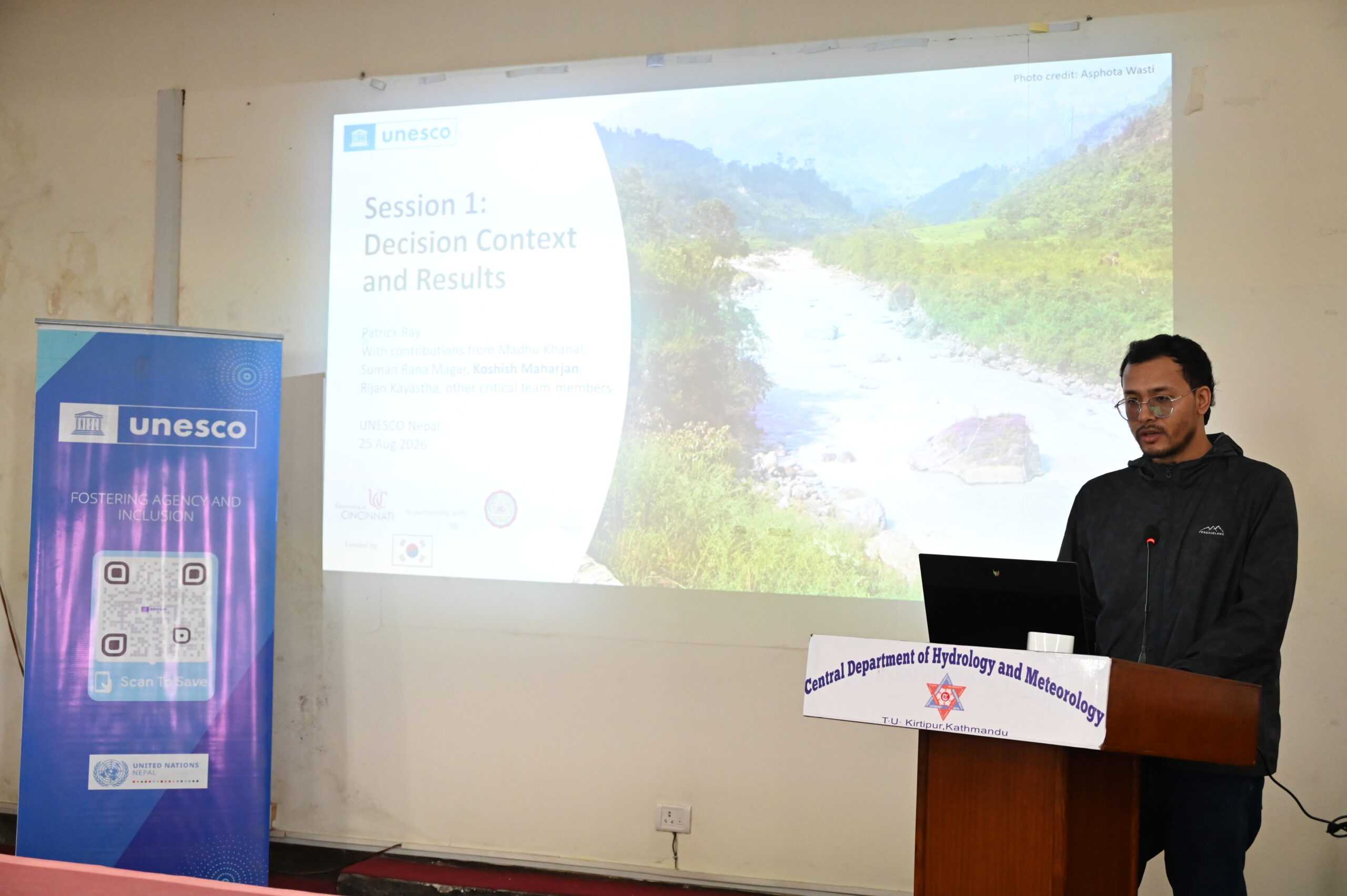
The main technical session focused on the ongoing application of CRIDA in the Koshi River Basin. Mr. Madhu Sudhan Khanal and Mr. Koshish Raj Maharjan presented the decision context, climate stress-testing process, modelling approach and key lessons from applying CRIDA in Nepal.
The Koshi case study examines the changing climate, hydrology, cryosphere, and associated risks across the basin. The analysis indicates a transition towards warmer and wetter conditions, with rising temperatures, increasing rainfall intensity, and projected changes in annual precipitation. To examine how water systems could respond under a range of uncertain conditions, the study used 48 climate scenarios, representing different combinations of temperature and precipitation changes.
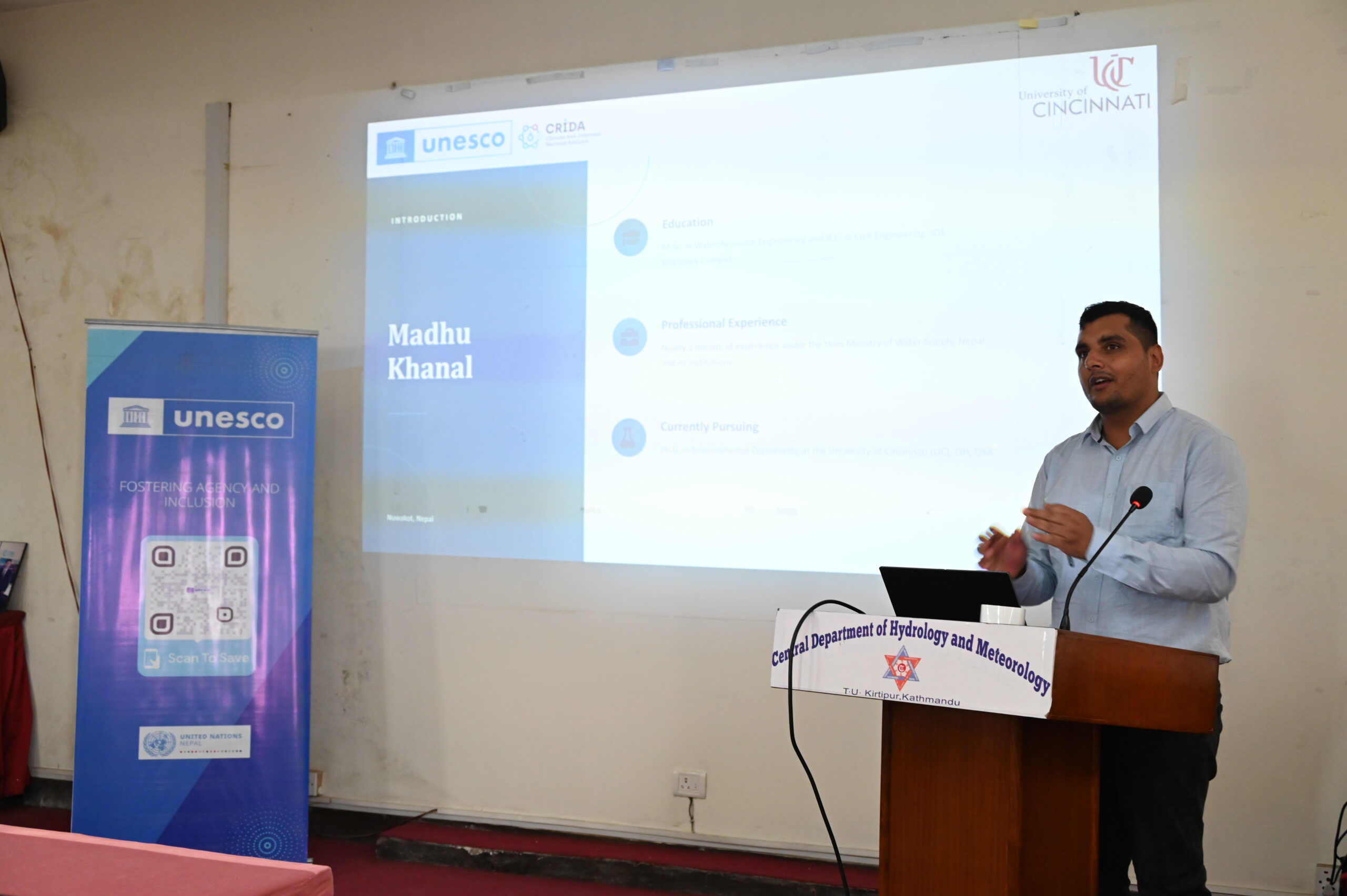
The presentation further highlighted key findings related to hydrological changes, glacier dynamics, streamflow, and water-related hazards, including potential GLOF impacts. The case study demonstrated how climate and hydrological analysis can be combined with stakeholder engagement and system modelling to better understand vulnerabilities and inform the consideration of adaptation options.
An interactive question-and-answer session provided an opprtunity for participants to reflect on the broader implications of CRIDA beyond the Koshi River Basin. Discussions explored the potential for replicating and adapting the approach in other river basins of Nepal, as well as explored how researchers and students could use CRIDA to connect climate and hydrological research more directly with practical planning and decision-making.
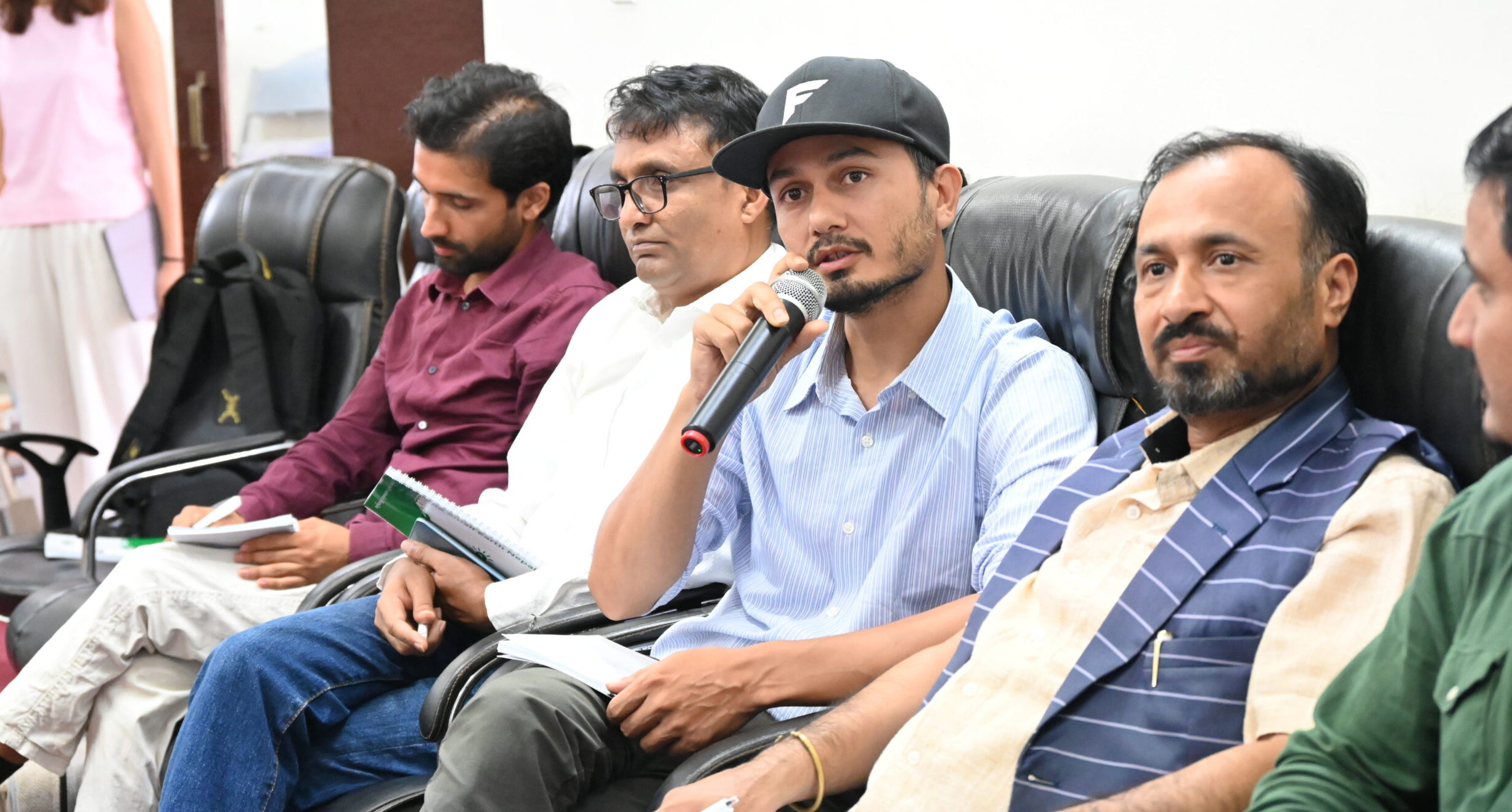
The discussions further highlighted opportunities for collaboration among researchers, academic institutions, and practitioners. Participants reflected on the potential for joint research, knowledge exchange and future applications of CRIDA in addressing water-related climate risks and supporting adaptation planning in Nepal.
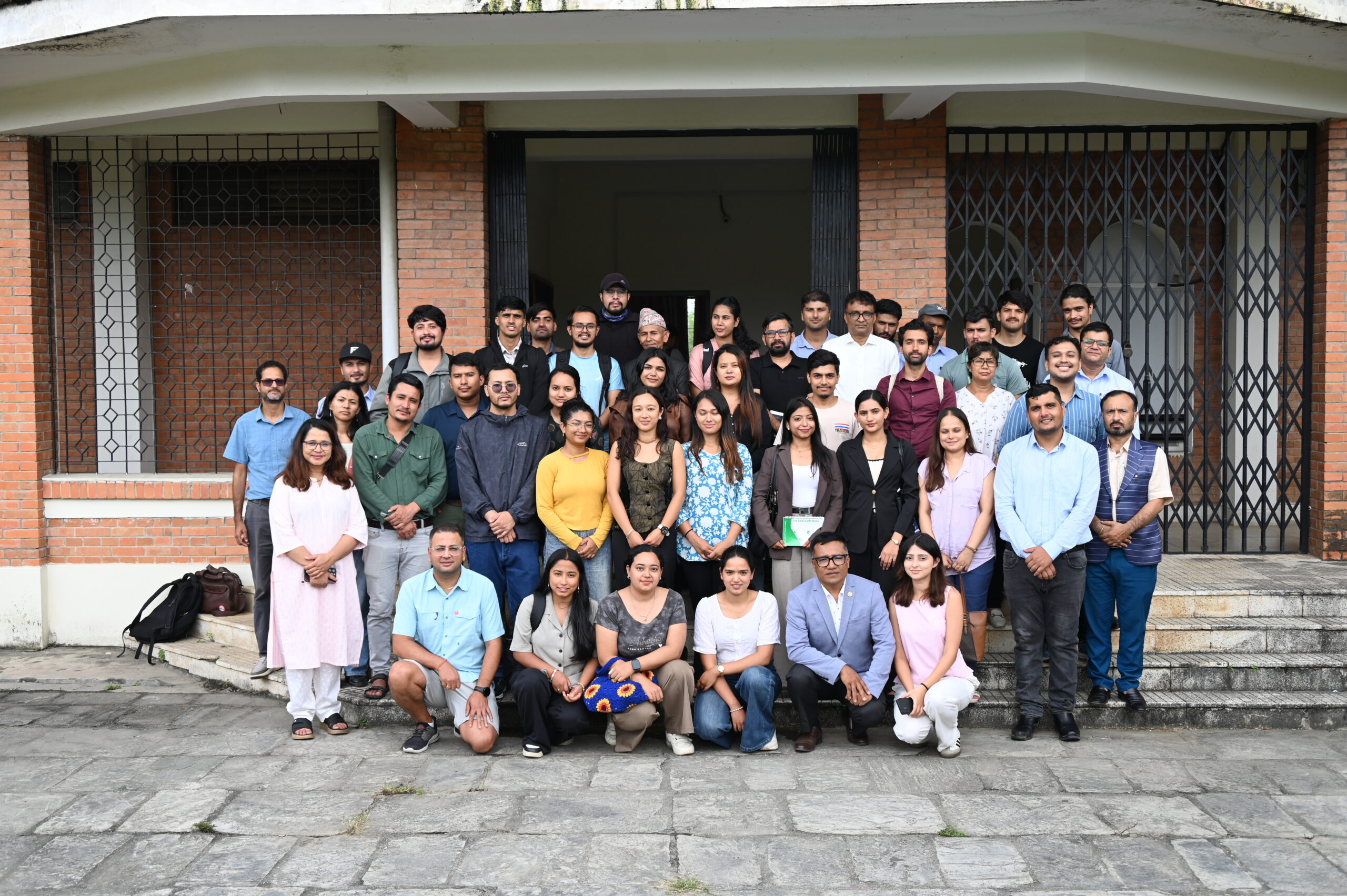
The event included guest remarks from Prof. Dr. Vishnu Pandey, Executive Director of the Centre for International Relations, Tribhuvan University, and Dr. Prabin Rokaya, Adjunct Professor at the University of Saskatchewan and the University of Calgary. The session concluded with a vote of thanks by Prof. Dr. Binod Dawadi, Professor at CDHM, followed by closing remarks and reflections on the way forward from Dr. Dhiraj Pradhananga, UNESCO Chair in Mountain Cryosphere and Water. In his closing remarks, Dr. Pradhananga, highlighted the upcoming activities of the UNESCO Chair and its focus on a collaborative approach to research and knowledge exchange. He encouraged continued engagement among researchers, students and partner institutions and emphasized the importance of creating opportunities for joint research, learning, and collaboration on climate and water-related issues.
The first session of the UNESCO Chair Talk Series created a platform for sharing the ongoing experiences of applying CRIDA in Nepal while opening a broader conversation on research collaboration, knowledge exchange and future applications of the approach in water resources management and climate adaptation.