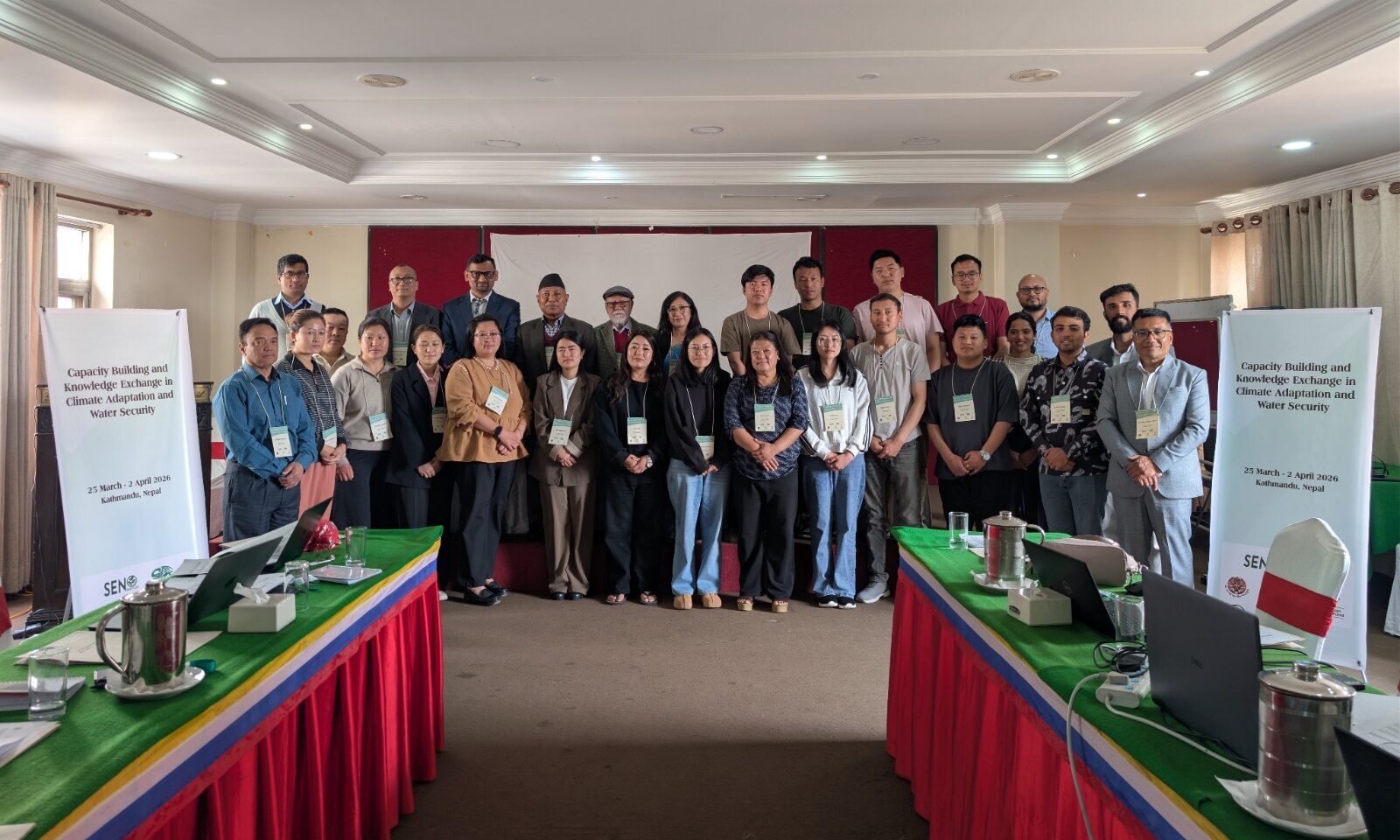
A delegation of eighteen government officials from Bhutan participated in a seven-day Capacity Building and Knowledge Exchange Programme on Climate Adaptation and Water Security, in Kathmandu with field visit at Ratu Watershed area of Nepal from 26 March to 1 April 2026. The programme was conducted by SEN Services Pvt. Ltd. in collaboration with The Small Earth Nepal (SEN), Royal Government of Bhutan, Adaptation Fund and Bhutan Trust Fund for Environmental Conservation.
The first two days (26th and 27th March) of the programme were held at Hotel Pension Vasana, Dillibazar, Kathmandu, where leading experts from Nepal delivered technical lectures and facilitate discussions across key thematic areas.
On 26th March, Dr. Dhiraj Pradhananga, Expert in Hydrology and Climate Science, presented on climate and hydrological monitoring, early warning systems, and data-informed decision-making. This was followed by a session led by Dr. Narendra Khanal, Expert in Environment, Climate Change, Water Security on Nature-based Solutions (Nbs) for water security, with a focus on spring revival and recharge protection. Dr. Jagannath Joshi, Expert in Watershed Management presented on integrated watershed and catchment management with reference to climate adaptation and water security.
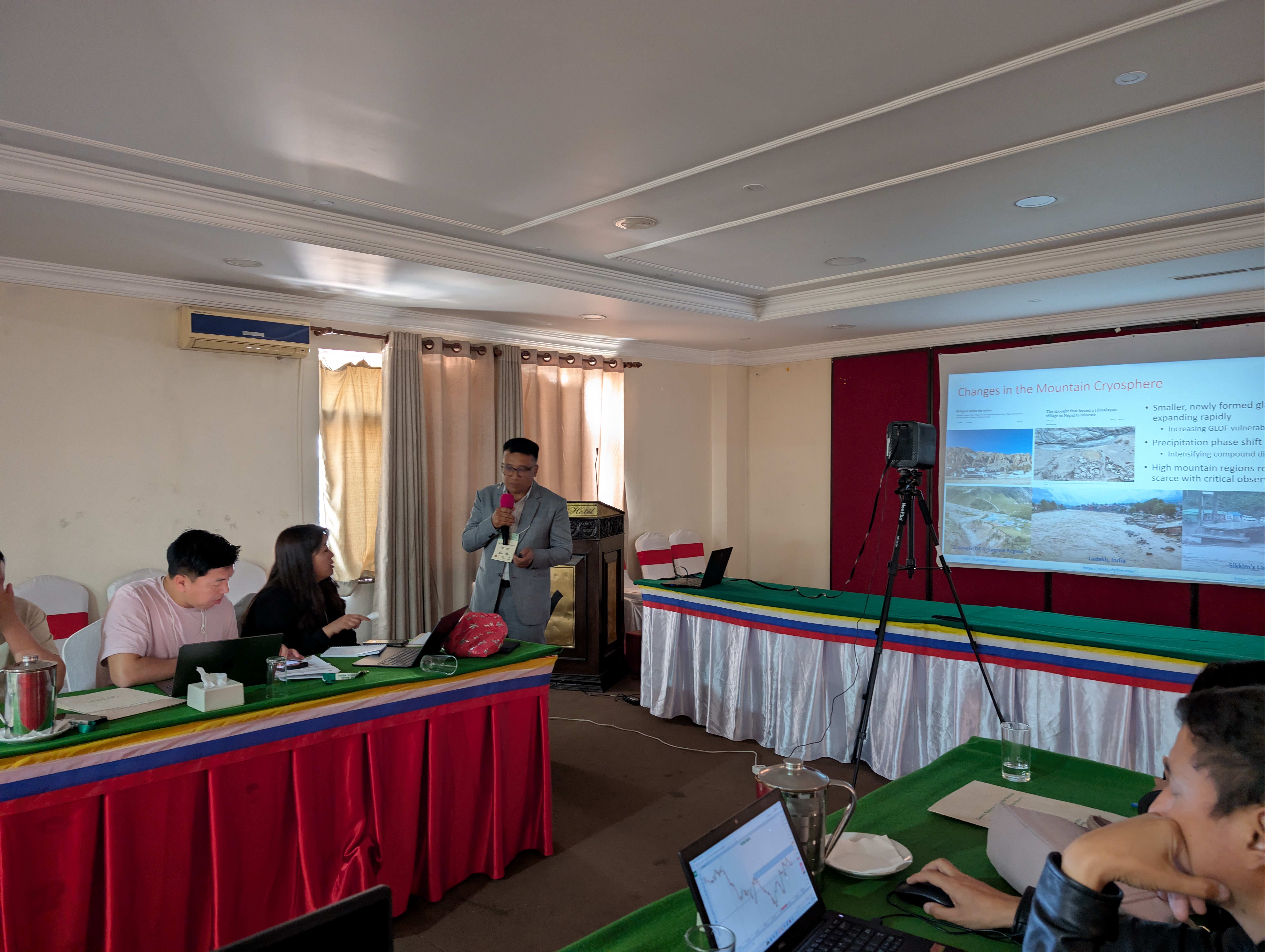
On 27th March, Dr. Rajit Ojha, Expert in Water Supply and Sanitation, delivered technical presentation on climate-resilient rural water supply systems and water governance. A subsequent session was by Mr. Tanka Prasad Paudel, Expert in Local Adaptation and Gender based approaches on on community-led and gender-responsive adaptation approaches. Mr. Tika Ram Baral, Expert Water Resources, Irrigation and Governance presented on water governance, policy integration, and institutional coordination.
Participants undertook a two-day field visit to the Ratu Watershed in Mahottari and Dhanusha districts, one of the showcase areas for community-based watershed management, bioengineering, and water resource conservation. Mr. Nagdev Yadav, Expert in Community Watershed Management and Adaptation, and President of Community Development and Advocacy Forum Nepal (CDAFN) guided the delegation and showed interventions on water security and adaptation in the field.
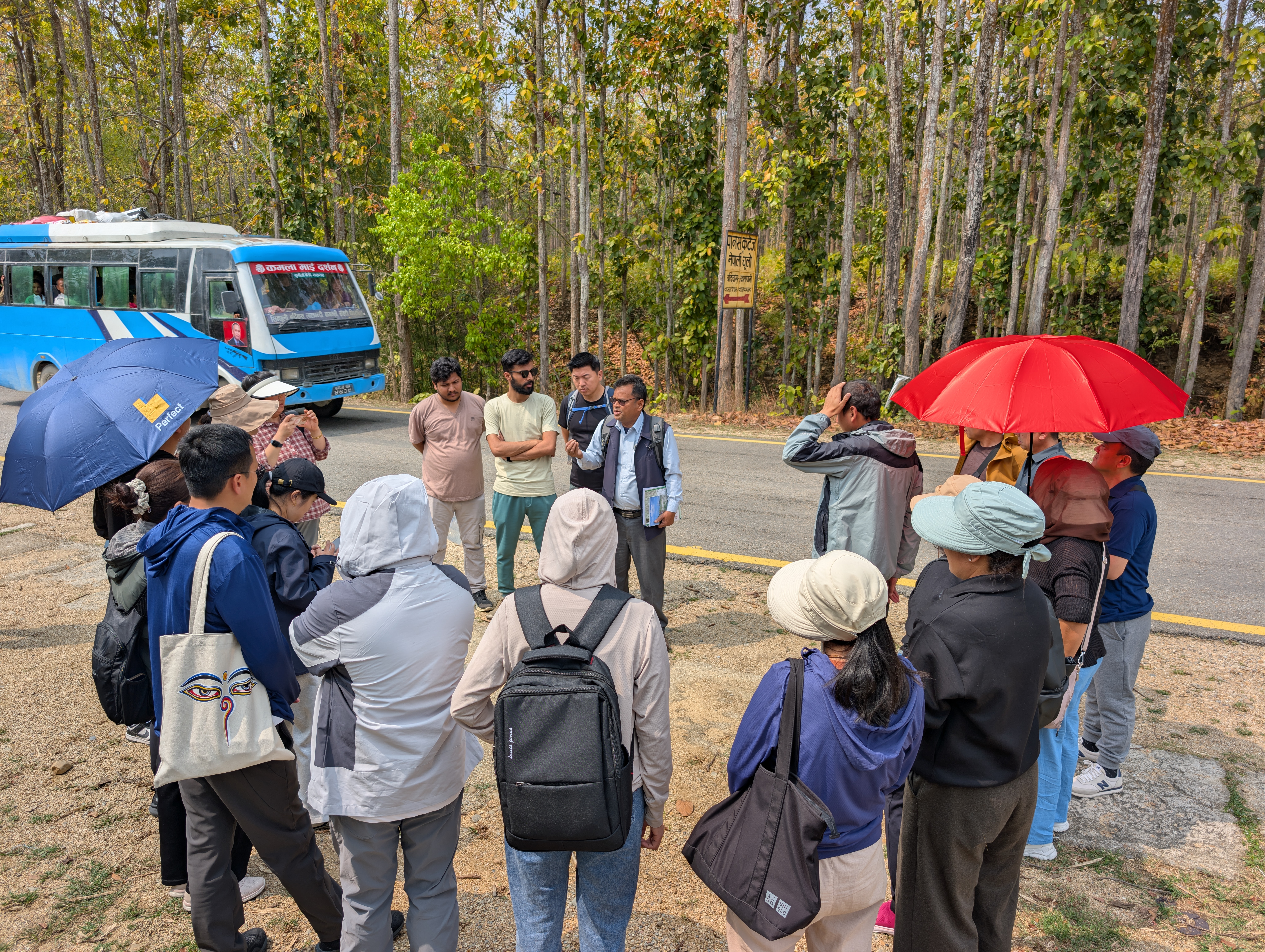
At Ratukhola Bridge, participants observed a cutoff wall-based drinking water system serving the local community. At Bahunmaara, the team assessed a Raised Ventilated Tank (RVT) drinking water system installed to improve access to clean water in the area. In Rajabas, a rainwater harvesting system designed for household and agricultural water needs was observed.
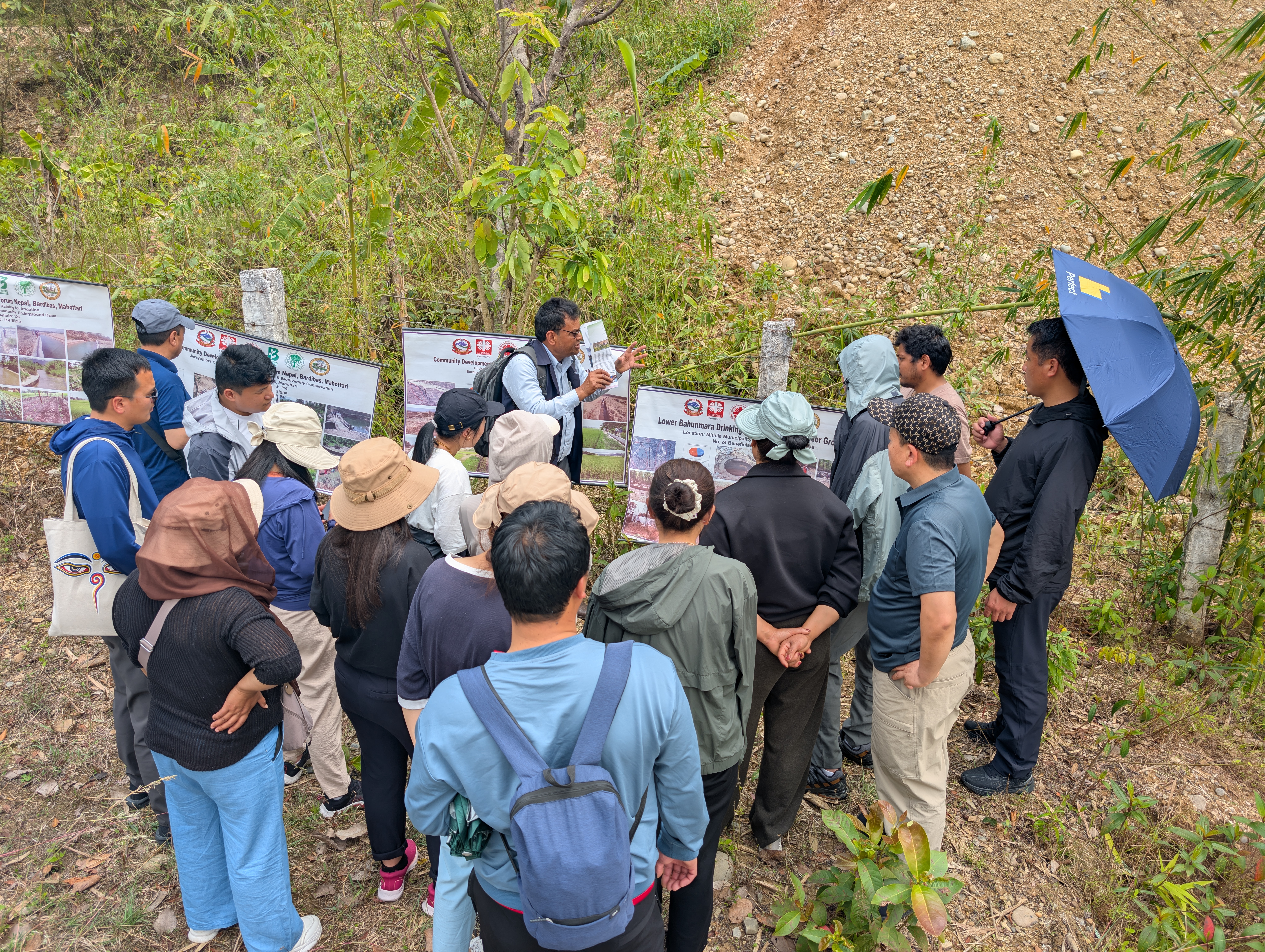
The delegation visited Kalapani, where gully control structures and soil erosion prevention measures have been implemented in a critically degraded area. At Aurahi, participants observed an active land restoration site where vegetation and soil recovery efforts are underway.
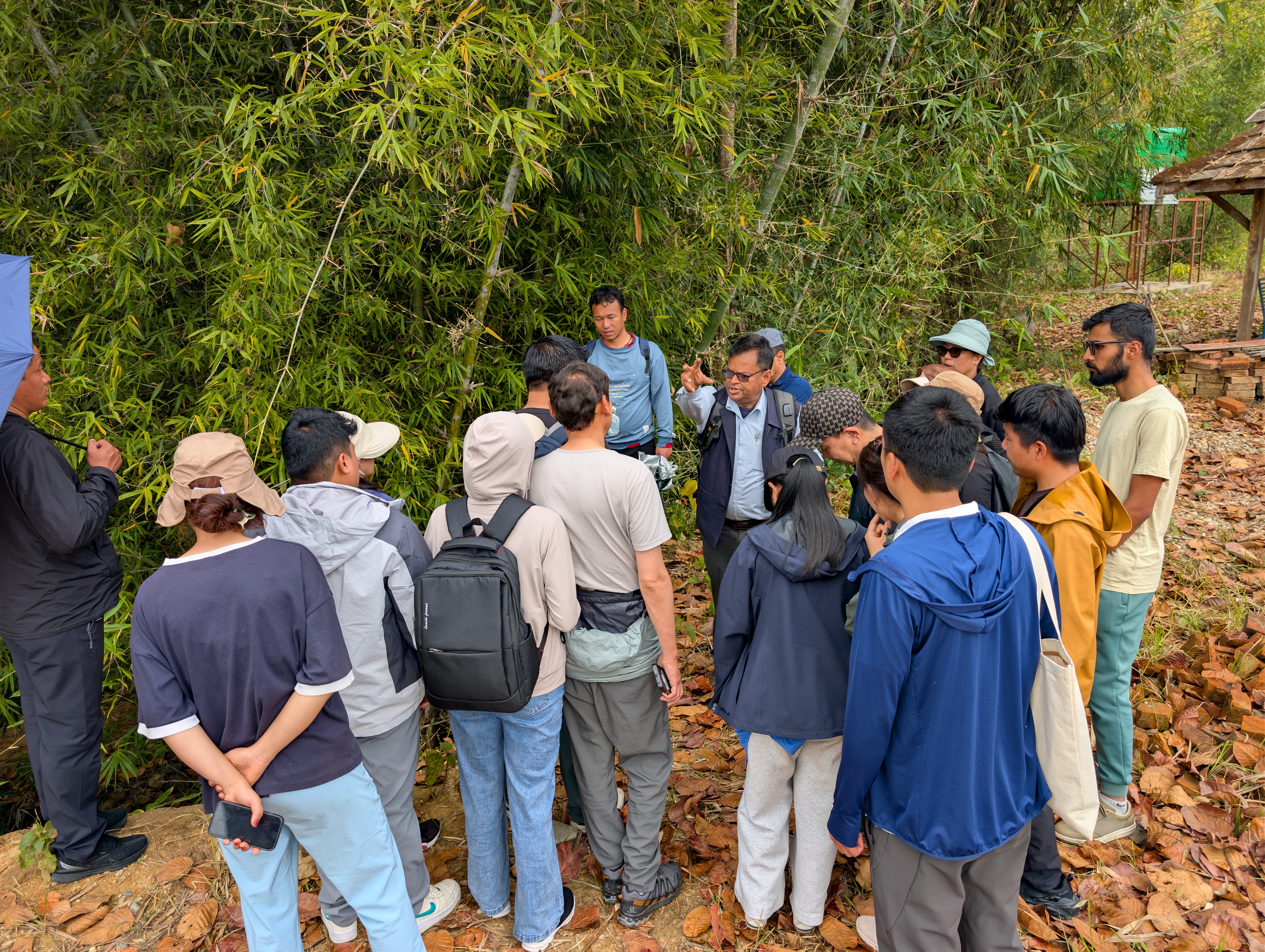
At each site, the team interacted with local community members who shared their experiences with the implemented interventions, including the benefits received, challenges encountered, and their ongoing roles in operation and maintenance. These exchanges provided ground-level insight into the real-world sustainability and impact of watershed management and adaptation programmes.