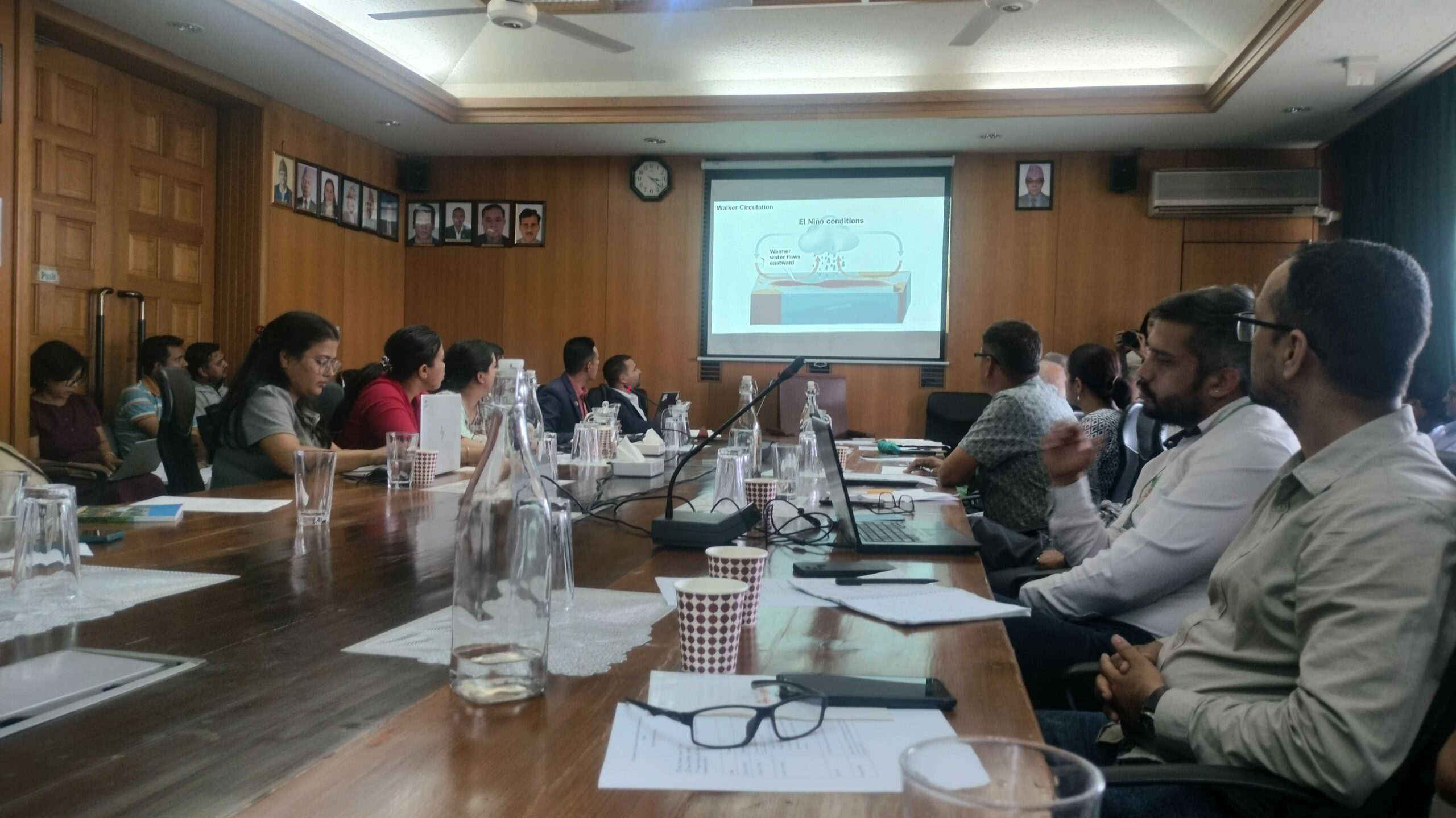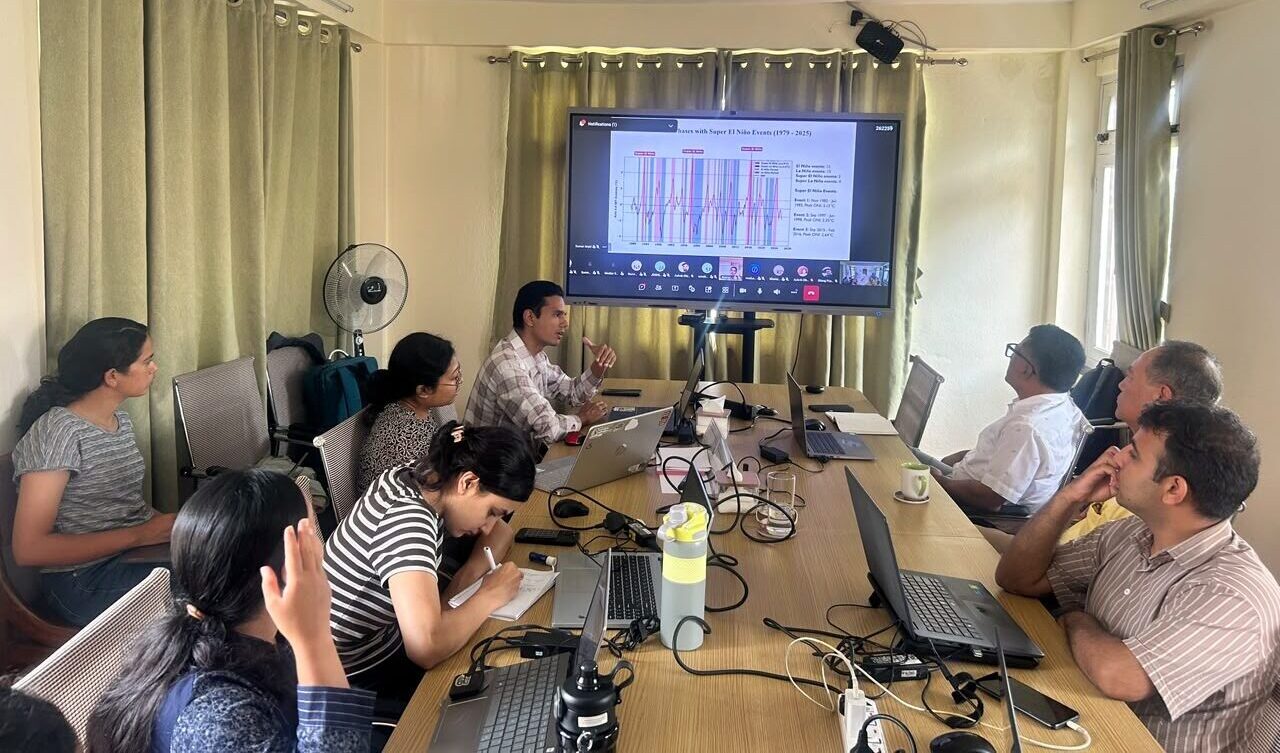
On 21st July 2026, The Small Earth Nepal (SEN) hosted an ongoing interactive discussion session and presented ongoing research “Impacts of ENSO on Nepal’s Hydroclimatic Variability and Agricultural Productivity”. This study investigated at how the El Niño–Southern Oscillation (ENSO) influences precipitation, temperature patterns, and agricultural yields across Nepal.
Mr. Kumar Aryal, Assistant Professor at the Department of Meteorology (DoM), Tri-Chandra Multiple Campus, Tribhuvan University and an Affiliate at the SEN, presented the findings on behalf of the research team. Drawing on more than four decades of climate data, the study is a collaborative effort of SEN research team, including Mr. Tribikram Basnet, Ms. Susa Manandhar, Ms. Aakriti Dhakal, Mr. Ashok Ghimire, Ms. Reshu Karki, and Mr. Sushant Dhital. This research is being supervised by Dr. Dhiraj Pradhananga, UNESCO Chair in Mountain Cryosphere and Water at Tribhuvan University.
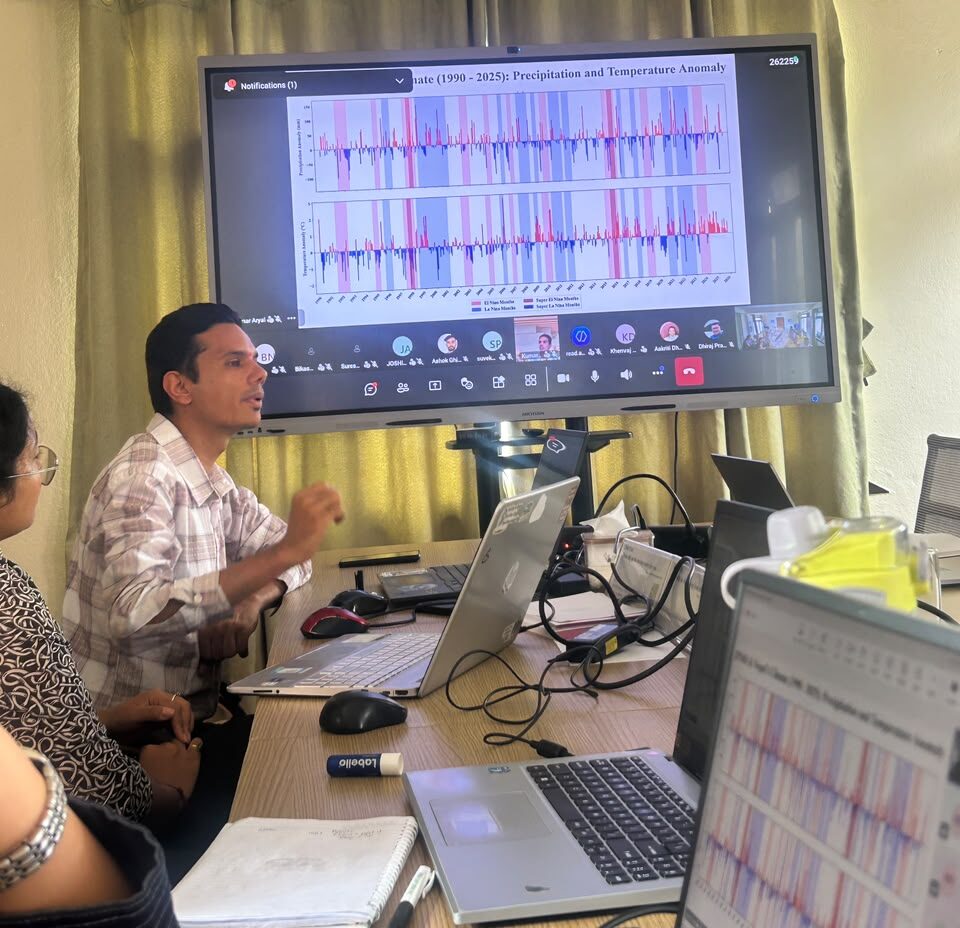
According to the findings, Nepal’s summer monsoon tends to weaken during El Niño years, accompanied by an approximate 8 % reduction in precipitation, the study’s clearest signal. The three strongest “super” El Niño events, in 1982, 1997, and 2015, showed the sharpest effects, with the steepest declines in crop yields occurring around these years. Additionally, crops responded differently across ENSO phases: wheat was most affected during El Niño years, while rice and maize were more affected during La Niña.
The session brought together a distinguished group of researchers, meteorologists, and climate experts representing SEN, Nepal Academy of Science and Technology (NAST), Department of Hydrology and Meteorology (DHM), Government of Nepal, and Tribhuvan University (TU). Key recommendations to the research focused on spatial interpolation methods used, the representativeness of the Karnali study region, and integration of flooding dynamics, streamflow data, and the Indian Ocean Dipole (IOD) in future phases of the research.
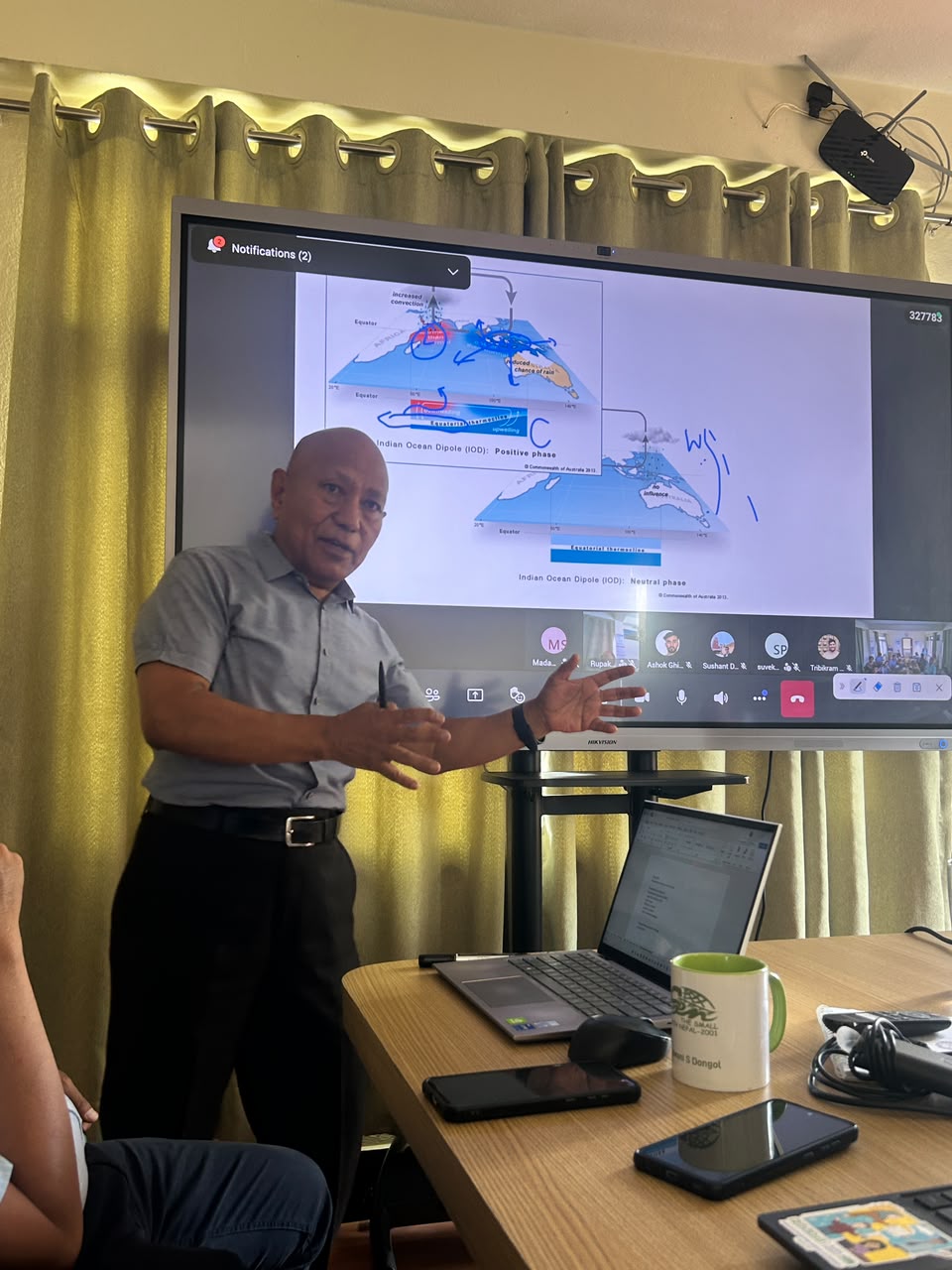
A second session on August 4th followed, led by presentations from Dr. Madan Lall Shrestha and Prof. Rupak Rajbhandari on global climate oscillations, atmospheric circulation, and the Indian Ocean Dipole. Mr. Kumar Aryal presented the latest findings on interannual variations in the onset and termination years of El Niño events and their influence on Nepal’s monsoon. The results showed that El Niño onset years are characterized by significant monsoon precipitation deficits, whereas termination years generally experience above-normal precipitation.
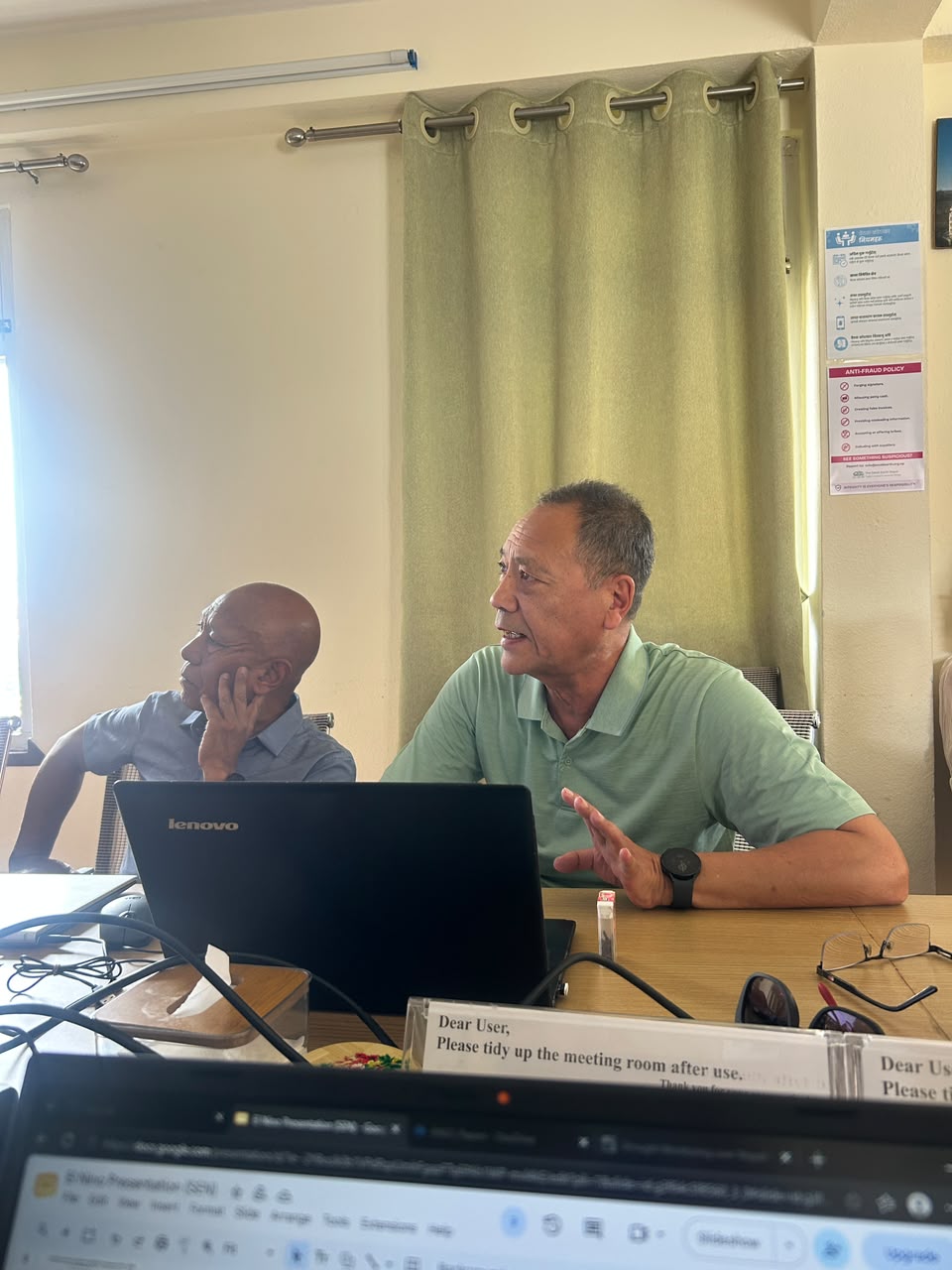
On the same day, Mr. Aryal presented the study at the 8th quarterly meeting of the Community of Practice on Water Resource Management (CoP-WRM) led by WECS and Oxfam. The presentation generated valuable discussions on the implications of El Niño for Nepal’s water resources and agricultural sectors. SEN will continue collaborating with WECS and DHM at an upcoming national-level symposium. The findings from this study are expected to contribute to broader national discussions on climate resilience, water security, and climate-informed agricultural planning.