Executive Summary
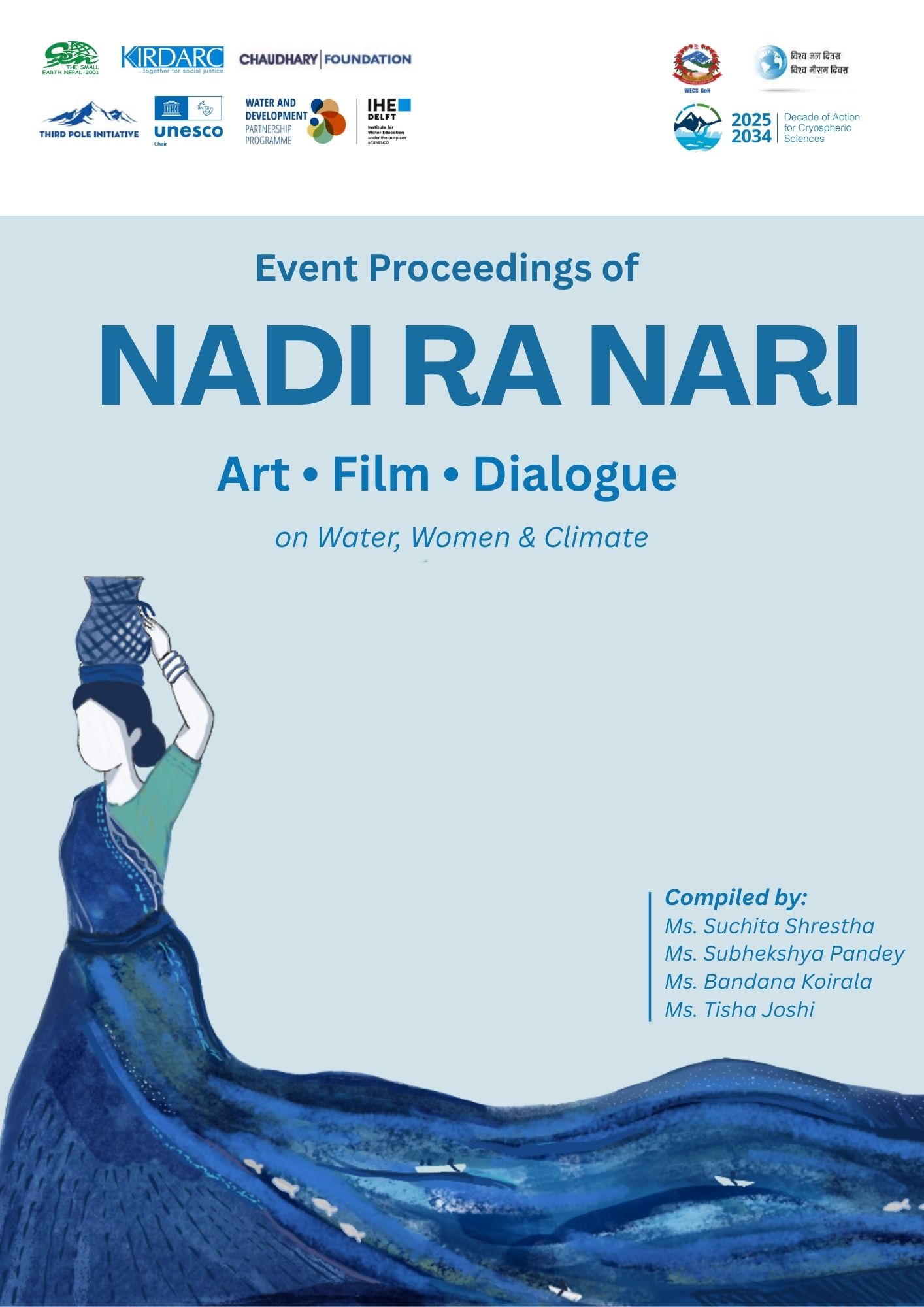
Nadi ra Nari (River and Woman) was organized on 26 March 2026 as a post-event of the Nepal National Glacier, Water and Weather Week (NNGWWW) 2026, aligning with the World Water Day 2026 theme, “Where Water Flows, Equality Grows.” Co-organized by The Small Earth Nepal (SEN), Karnali Integrated Rural Development and Research Centre (KIRDARC) Nepal, and Chaudhary Foundation’s (CF) Third Pole Initiative, the event explored the intersections of water, gender, climate change, and community resilience through art, storytelling, film, and dialogue.
Nadi ra Nari artivism initiative originally started in Bardiya district, where more than 30 Tharu women, 40 students, and five male allies documented their lived experiences of flooding, water insecurity, and relationships with the Karnali River through paintings, poems, stories, songs, and other creative expressions. These community-generated works formed the foundation of the exhibition showcased during the event.
The exhibition showcased 50 creative works that reflected community experiences of floods, environmental change, displacement, livelihoods, culture, and identity. The screening of Dhye Dreams further expanded the conversation by highlighting the experiences of women in Upper Mustang facing water scarcity and climate-induced displacement. Reflections from experts underscored the value of integrating local knowledge, cultural expression, and scientific understanding in addressing climate and water challenges.
The panel discussion emphasized that women continue to bear significant burdens related to water insecurity, disaster risks, migration, and unpaid care work, yet remain underrepresented in decision-making processes. Participants highlighted the importance of moving beyond symbolic representation toward meaningful leadership and participation of women in water governance and climate adaptation. The discussion also reinforced the need to recognize indigenous knowledge systems, support community-led adaptation practices, and strengthen collaboration among researchers, artists, policymakers, and local communities.
A central message emerging from the event was that art and storytelling can serve as powerful tools for amplifying lived experiences, fostering dialogue, and humanizing climate narratives that are often dominated by technical and scientific perspectives. By creating space for voices that are frequently excluded from formal discussions, Nadi ra Nari defied the traditional stakeholder dialogues and demonstrated how creative approaches can contribute to more inclusive and people-centered climate action.
The event concluded with a collective call to strengthen gender-responsive water governance, value local and indigenous knowledge, integrate arts and culture into climate discourse, and promote cross-sector collaboration to build resilient and equitable futures for communities affected by climate change.