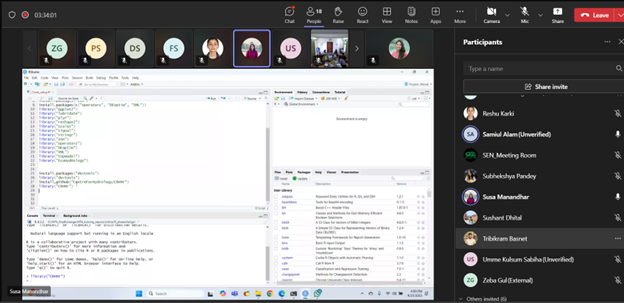
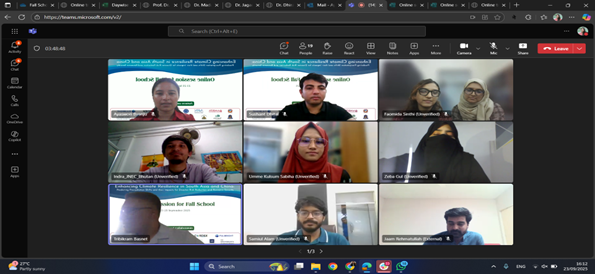
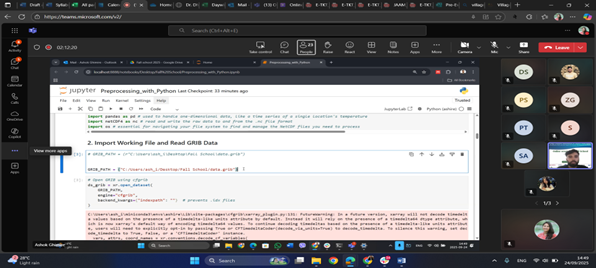
The Small Earth Nepal (SEN) conducted a three-day online training during 23-25 September 2025 as a preparatory training for the Fall School on ‘Advanced Climate Data Analytics and Strategies’ scheduled for 14-18 October 2025 in Nepal. The Fall School is one of the key activities of the project “Enhancing Climate Resilience in South Asia and China: Predicting Precipitation Shifts and Their Impacts for Disaster Risk Reduction and Resource Security”, funded by Asia-Pacific Network for Global Change Research (APN).
The training brought together 12 Research Assistants (RAs) and Early Career Researchers (ECRs) from project collaborating countries: Nepal, Bhutan, India, Pakistan, and Bangladesh, providing a unique platform and capacitated them on statistical analysis tools for climate data analysis. Dr. Dhiraj Pradhananga, Project Lead opened the training, welcoming all the participants. Ms. Ayaswori Byanju, Project Collaborator, highlighted the objectives of the Fall School and the importance of the pre-online sessions for the participants.
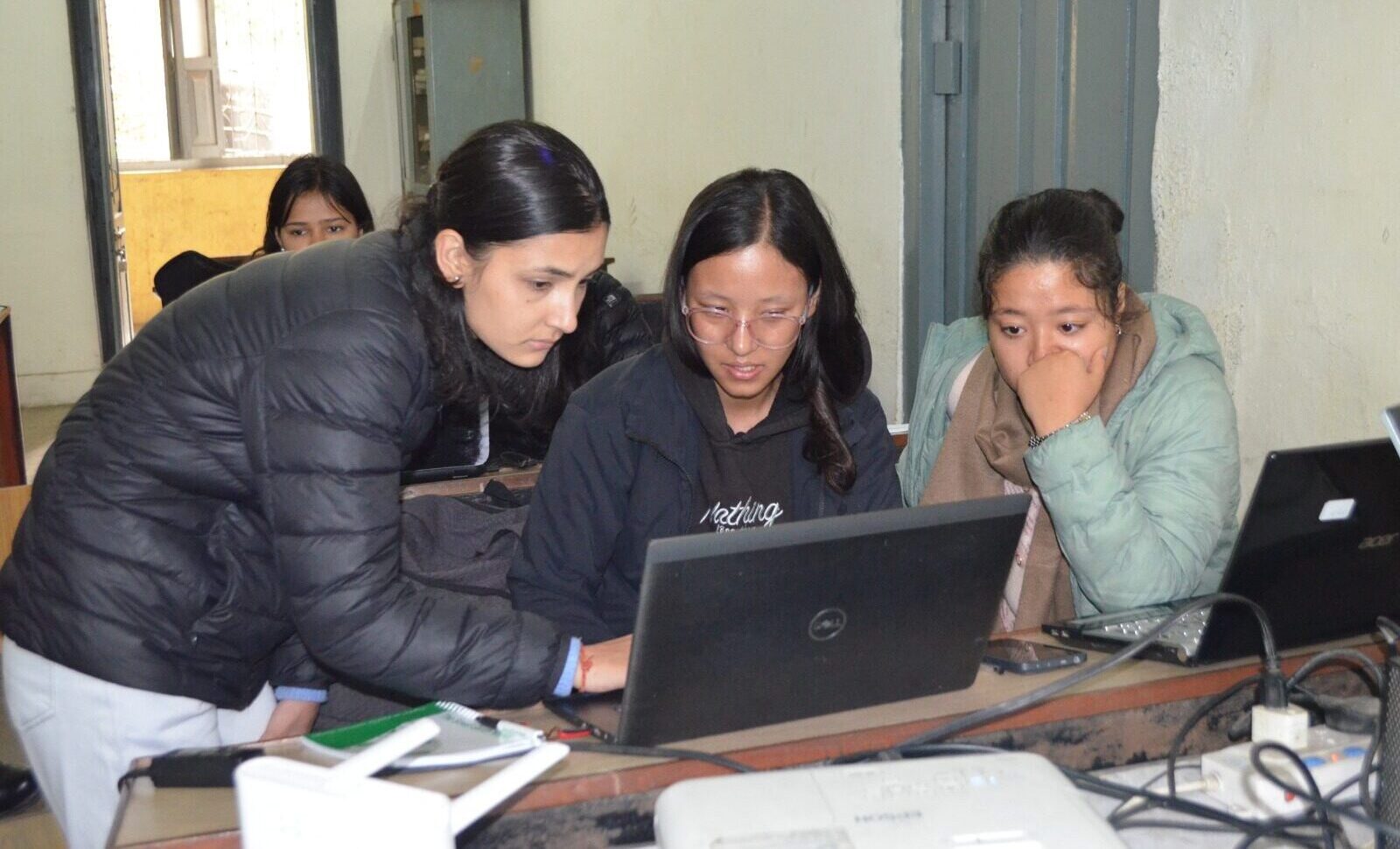
Participants were introduced to statistical tools, Python-based climate data processing, precipitation trend analysis, anomaly detection, and spatial mapping using gridded climate datasets. The training combined theoretical concepts with hands-on exercises to ensure participants could practically apply the techniques to their own research during in-person Fall School training during October.
A team from SEN: Ms. Aakriti Dhakal, Mr. Sushant Dhital, Mr. Tribikram Basnet, Mr. Ashok Ghimire, Ms. Reshu Karki, and Ms. Susa Manandhar conducted the training sessions.
The training enhanced the technical capacity of the participants in climate data handling, analysis, and visualization, supporting evidence-based research and decision-making on climate issues across South Asia. It also strengthened regional networks among ECRs working on climate change.
All participants of the online training will be joining the in-person Fall School on 14-18 October 2025 in Nepal, where they will further deepen their expertise in climate data analysis by engaging in practical hands-on exercises and sharing results of each collaborating countries.