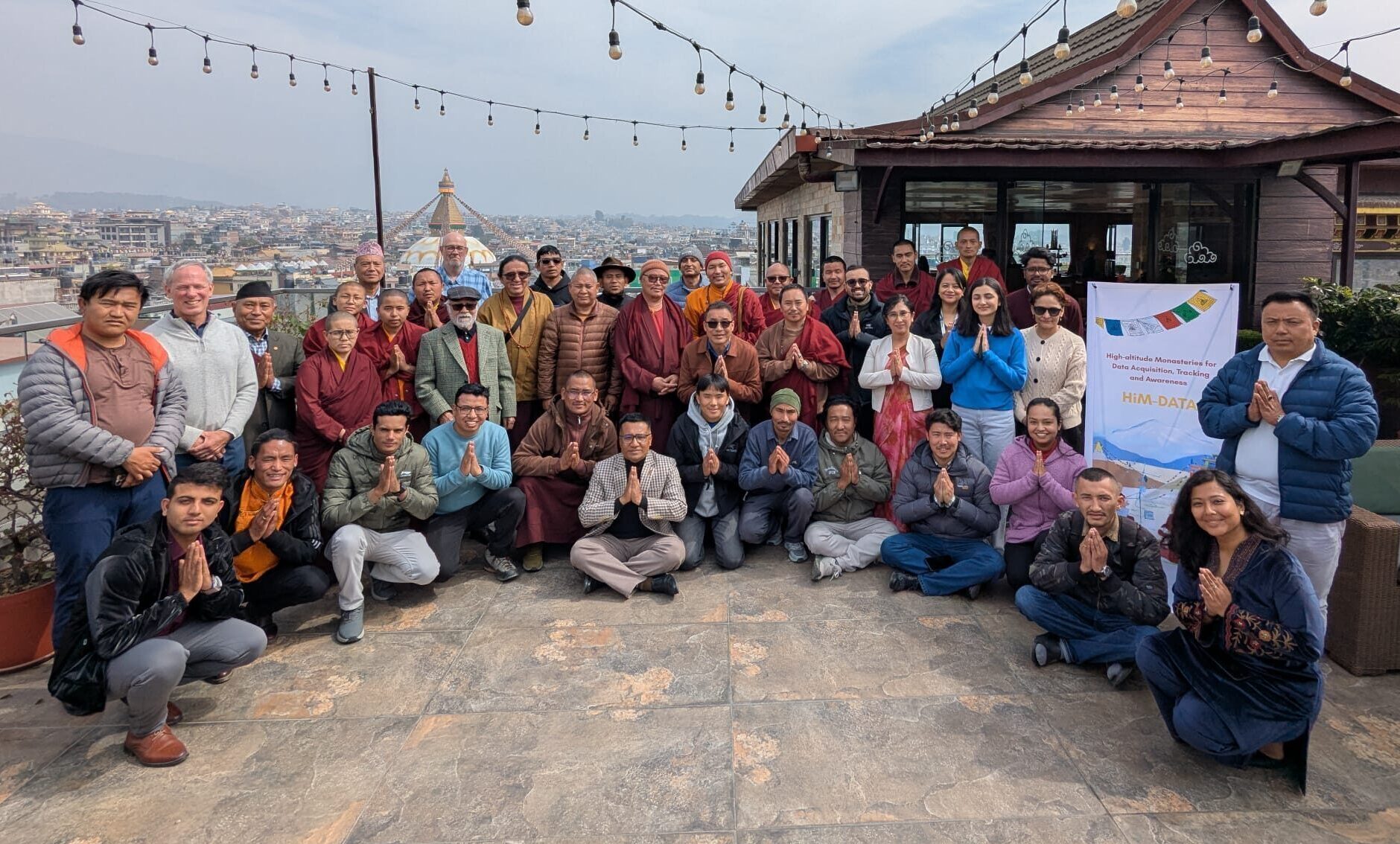
A groundbreaking international workshop is being launched in Kathmandu connecting scientists, government officials, donors, and monastic communities to launch the High-altitude Monasteries for Data Acquisition, Tracking & Awareness (HiM-DATA) project.
The Himalayan region, often called the “Third Pole,” is warming at nearly twice the global average, threatening water security, ecosystems, and the livelihoods of over 2 billion people downstream. Despite its critical role, the area remains severely under monitored due to its extreme terrain and logistical challenges.
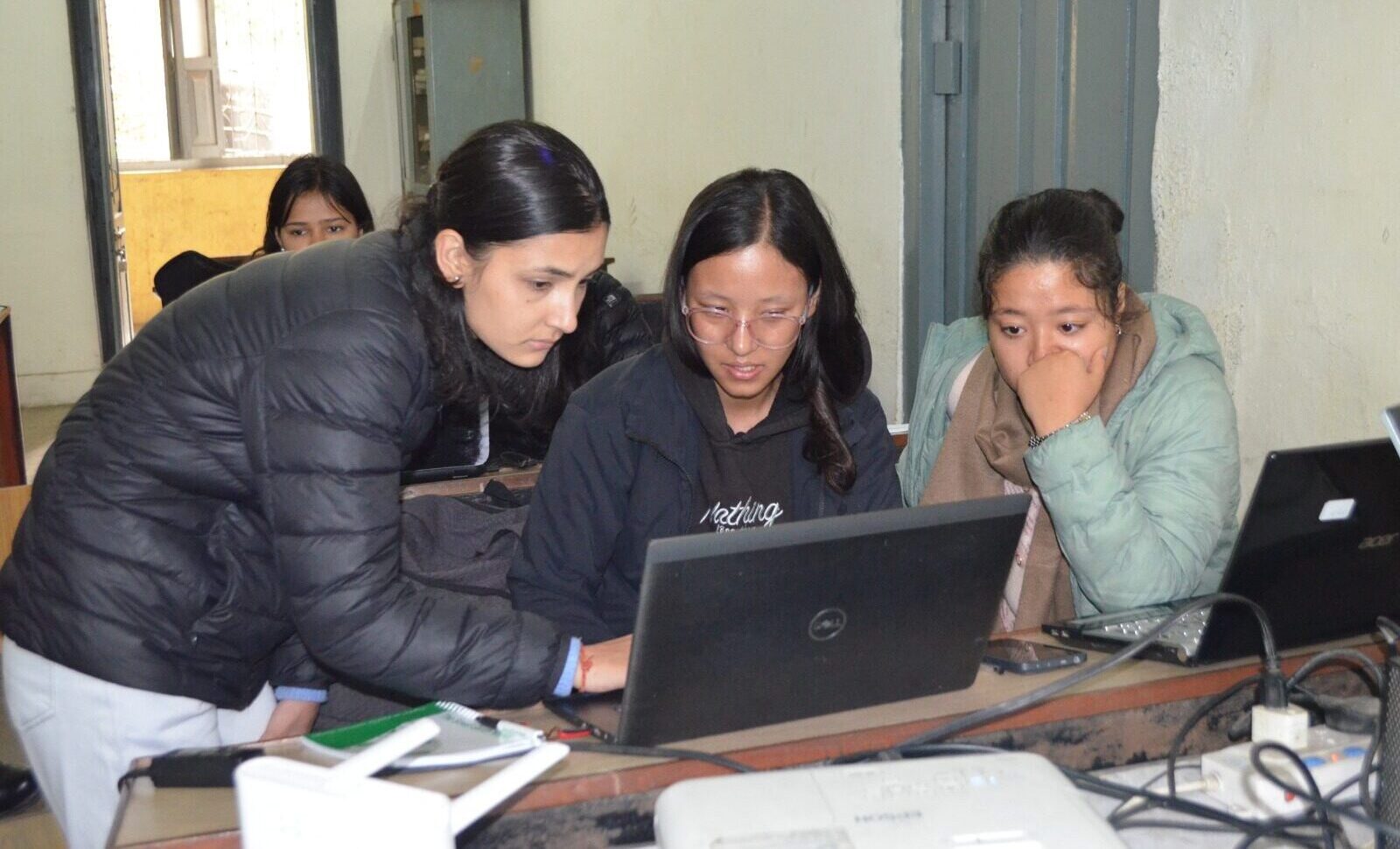
The HiM-DATA initiative proposes an innovative, community-led solution: installing automated weather stations in high-altitude monasteries, which offer year-round occupancy and security. Locals, monks, nuns, and school volunteers will gain knowledge of the instruments and the daily weather they record, fostering ownership and supporting not only long-term sustainable data collection but also the development of a deeper understanding of climate change in high-altitude regions.
SEN has long been an advocate of a citizen science approach, working closely with monastic communities, students, and local stakeholders to bridge the gap in scientific communication through initiatives such as Landslide Environmental Virtual Observatories (LEVO) and Monks for Moving Planet: Hiking and Praying for Zero Carbon Emission. HiM-DATA now takes this effort a step further by integrating monasteries and local communities directly into a citizen science network, expanding community participation to advance open data and open science principles. As we now move towards the Decade of Action for Cryospheric Sciences, the HiM-DATA project positions the Himalayan Community at the very center of cryospheric action.
The upcoming three-day workshop aims to align stakeholders on project vision, technical implementation, and community engagement strategies. The expected outcomes include a finalized pilot plan, defined roles and timelines, strengthened partnerships, and the identification of additional high-altitude monasteries and schools to expand HiM-DATA.
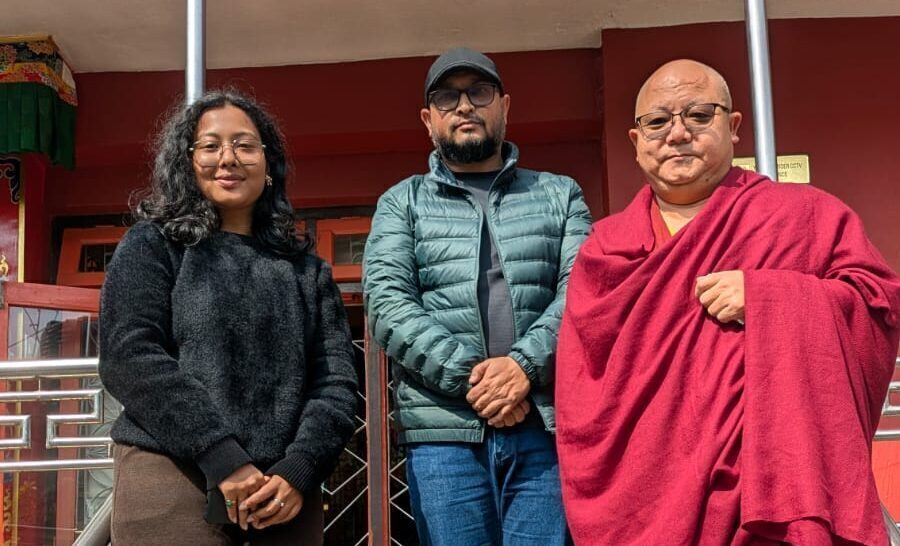
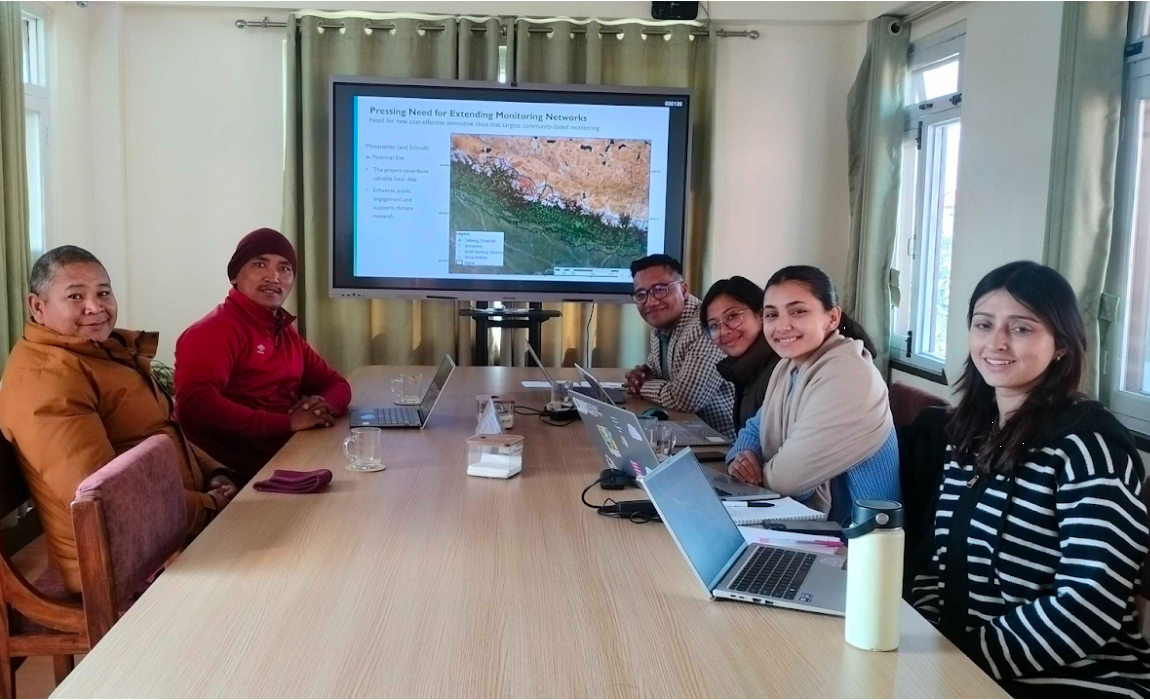
Preliminary meetings have already progressed with monastic communities. In late December 2025, the project began with an initial meeting with the monks of Namkhyung Monastery (Mr. Padma Dorjee, Principal and Mr. Tsegya, Treasurer) to discuss connectivity, power supply, safety, and local support for station installation.
HiM-DATA aims to strengthen the network of weather stations across the Himalayas, with a broader goal of improving snow and glacier tracking, hydrological modeling, extreme-weather forecasting, and climate-adaptation planning.
The project represents a unique fusion of modern science and traditional stewardship, offering a replicable and scalable model for climate resilience in some of the world’s most vulnerable and vital regions.