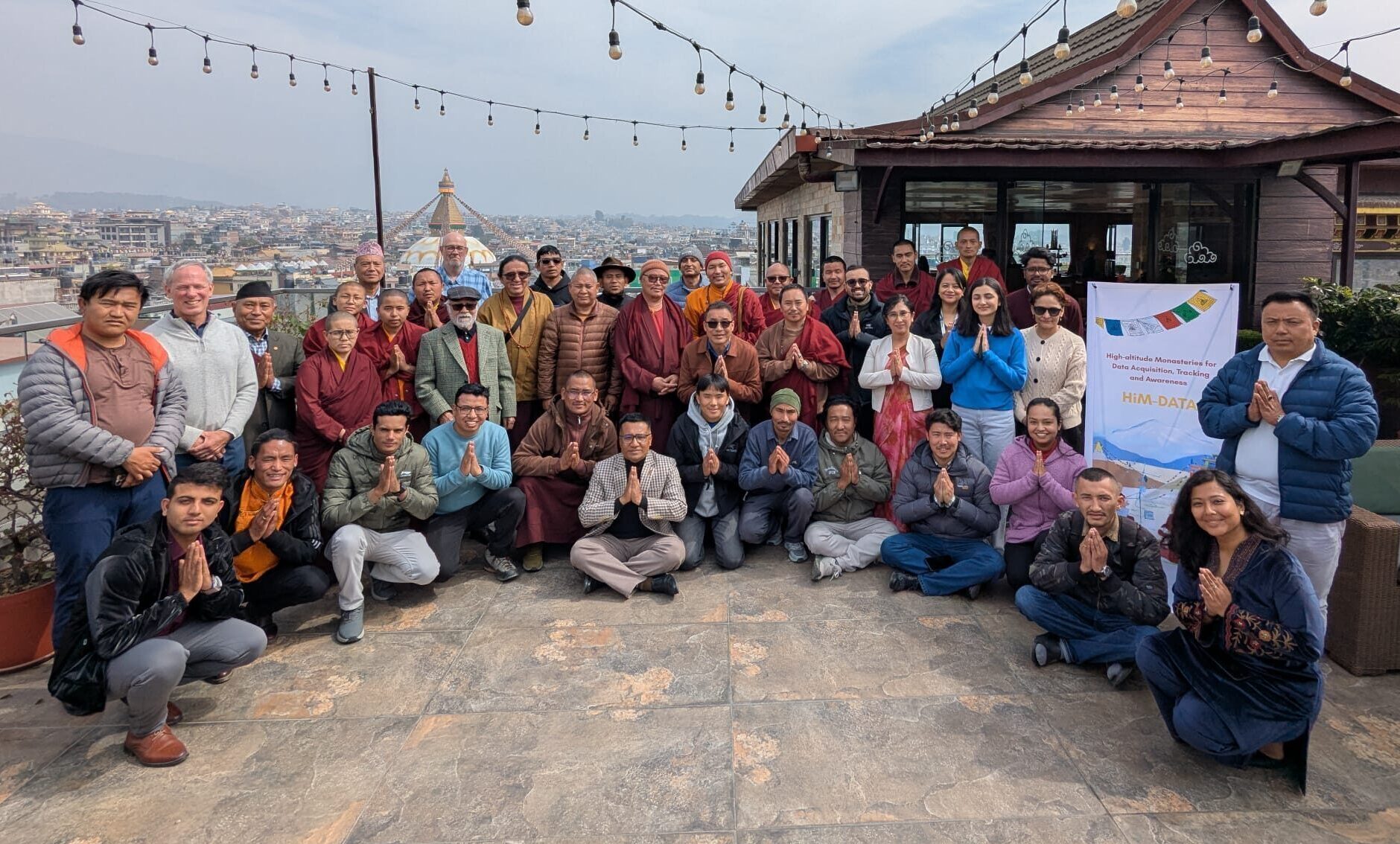
Cryospheric Society Nepal (CSN) and The Small Earth Nepal (SEN) have jointly initiated a webinar series. This webinar marks one of the first webinars organized under this series with CSN, with several more webinars planned in the coming days. The webinar also serves as a pre-event for Nepal National Glacier and Water Week (NNGWWW) 2026, scheduled to take place from 17 to 23 March 2026, during which multiple thematic events will be organized. This webinar is among the first pre-events leading up to NNGWWW 2026.
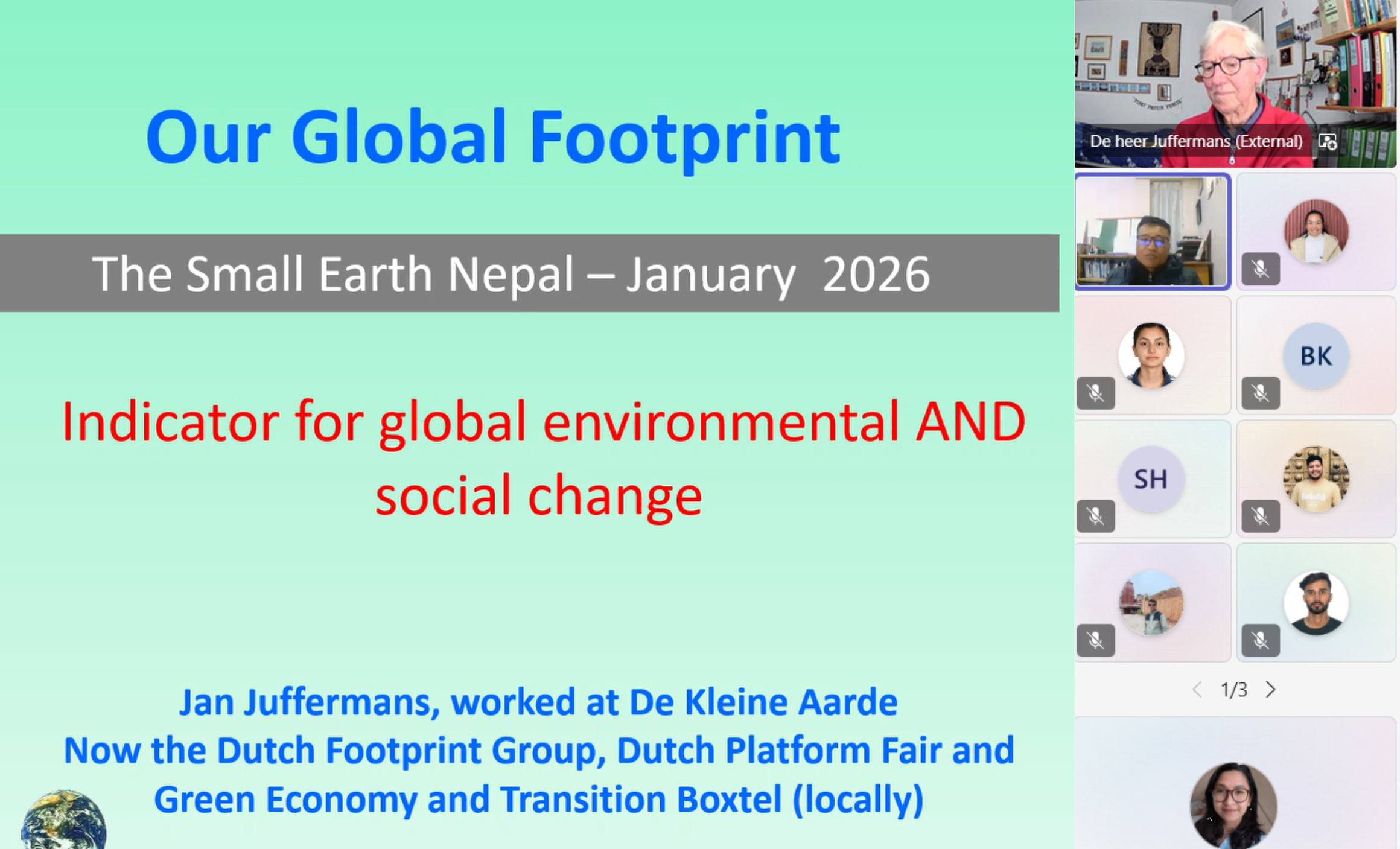
This webinar featured Dr. Jan Juffermans as the speaker and Dr. Dhiraj Pradhananga (Founding President, SEN) as the moderator. Jan Juffermans is a Dutch Author and Environmental Activist with a long-standing career in global sustainability and extensive engagement with the development and application of the global ecological footprint model. Jan introduced and discussed the concept of “footprint justice.” This topic is particularly relevant to mountain regions, which contribute minimally to the global ecological footprint yet face disproportionately high impacts from environmental degradation and climate change.
In his presentation, Jan highlighted the ecological footprint as both an environmental and a social indicator, providing historical context and insights from decades of work in the Netherlands. Drawing on his experience with the Dutch Footprint Working Group, he explained how footprint thinking has evolved from national and product-level assessments to personal and lifestyle footprints. He emphasized the role of educational tools and platforms such as the Global Footprint Network in raising awareness about global ecological overshooting and inequitable resource use. He also discussed alternative economic frameworks, including one-planet living, well-being economies, and the doughnut economy, as viable pathways beyond growth-centered economic models.
Jan concluded by emphasizing the concept of “footprint justice,” arguing that excessively large ecological footprints constitute a violation of human rights in a world that has already exceeded planetary boundaries. Building on recent legal developments in climate justice, including the advisory opinion of the International Court of Justice, he outlined ongoing efforts to advance the footprint of justice as a legal issue. The central message of his presentation underscored that fair sharing of resources within planetary limits is a human right for present and future generations, and that countries such as Nepal can play a meaningful role in supporting and advancing this emerging legal and ethical framework.