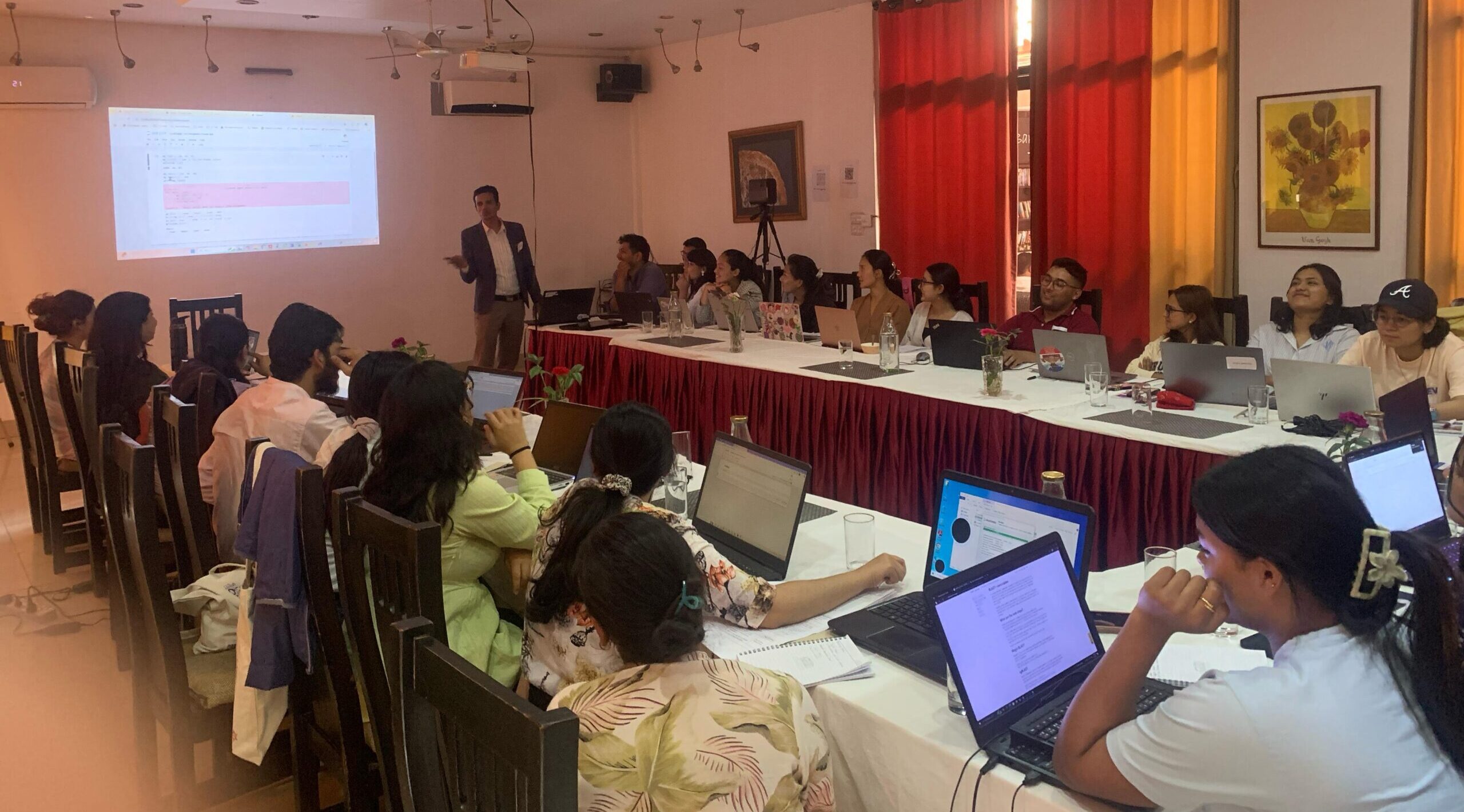
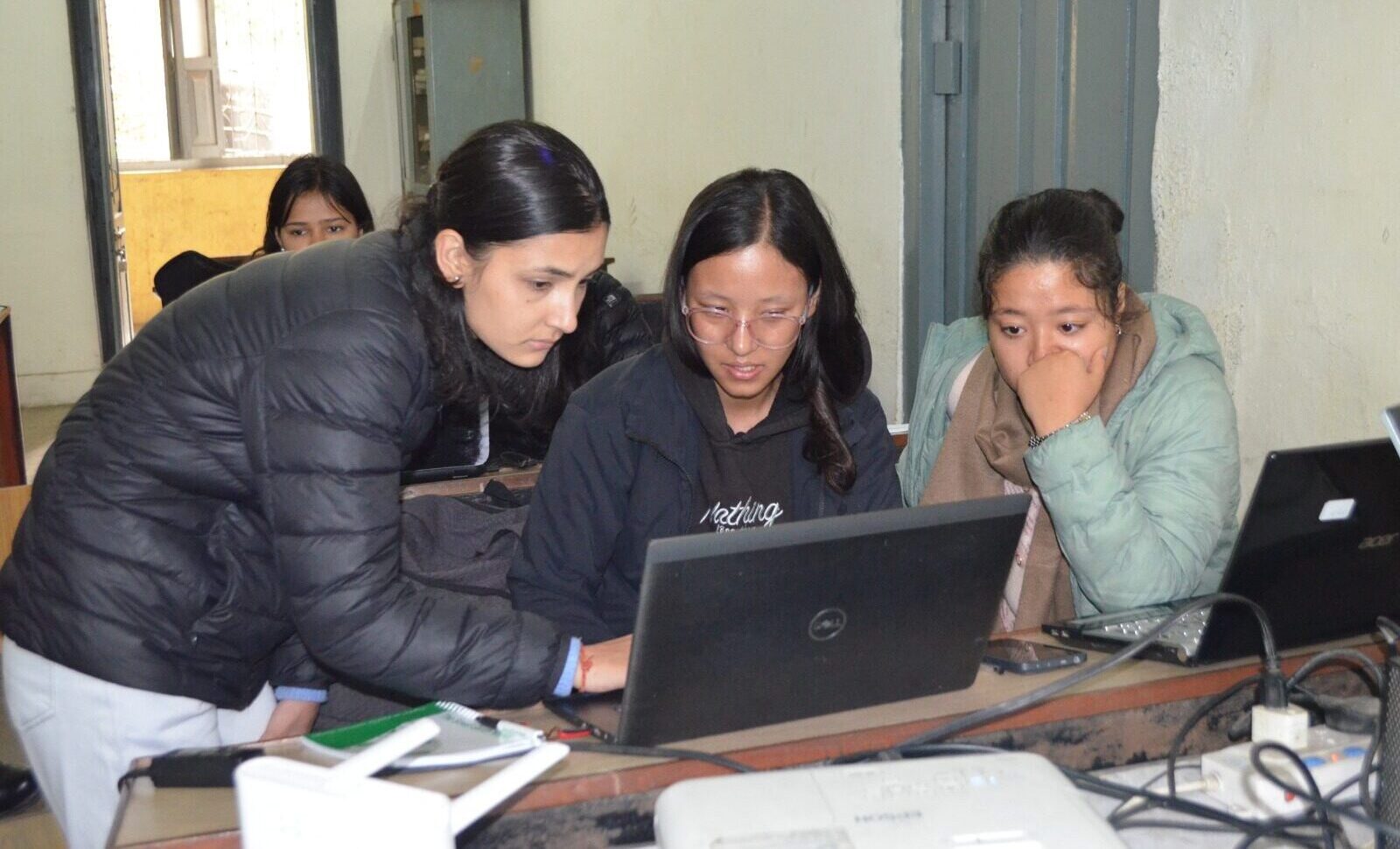
The Small Earth Nepal (SEN) conducted a four-day hands-on training on “Climate Data Analysis” on 15, 16, 17 & 19 May 2025 at Kathmandu, Nepal, under the project “Promoting CLimAte ReSilient and Socially Inclusive Water Management in the Lower Karnali Watershed Region, Nepal (CLASSIK).” The workshop brought together 25 (F: 22 M:3) graduate students, early career researchers, and practitioners from diverse backgrounds such as environment, hydrology, meteorology, forestry, agriculture, water management, and engineering.
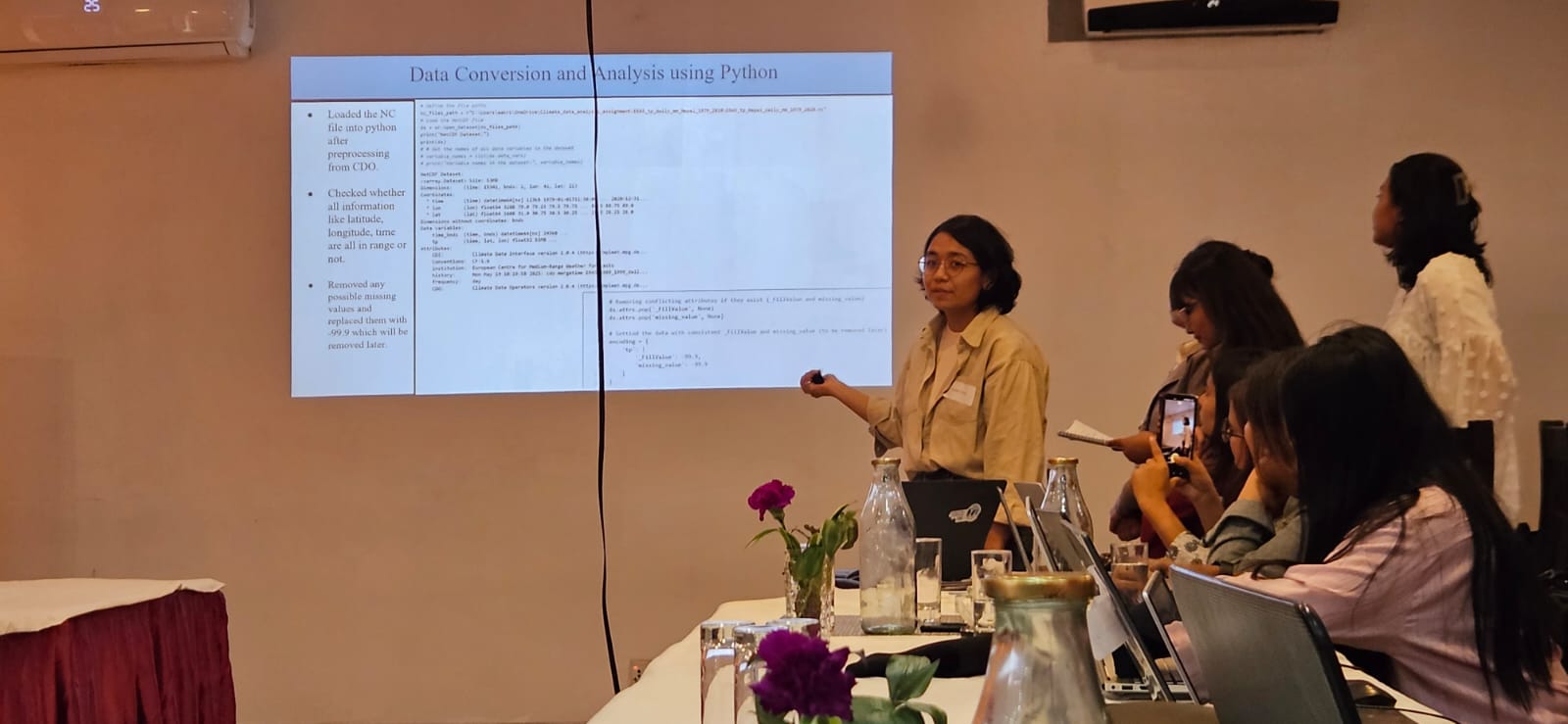
The training equipped participants with the practical, hands-on skills to access, process, analyze, and visualize climate data using tools like Climate Data Operators (CDO) and Python while working with climate datasets such as ERA5. The training kicked off with the foundational sessions on the importance of climate data analysis in different fields, types of climate data, and their applications. Participants learned how to access climate data from various sources and preprocess the acquired datasets using CDO. They developed essential skills in running Python scripts, which are crucial for handling large datasets, and utilized these skills to analyze the pre-processed data. Throughout the program, participants engaged in a hands-on analysis of Nepal’s precipitation data, where they calculated trends, visualized precipitation patterns, and identified anomalies. On the final day, participants collaborated in groups to carry out a mini-project that encompassed data acquisition and presentation of final outputs. Each group shared their findings and received constructive feedback from trainers and peers.
Through collaborative group work, the training built confidence and encouraged participants to apply these skills in their own research and academic projects in the near future. The training was not only able to deliver the knowledge and skills for climate data analysis but was also able to build a network of like-minded cohorts of climate data enthusiasts. The training was able to empower graduates, early career researchers and practitioners in handling climate data and hence help in building local capacity for climate resilience.